 Decline in Naxal Violence
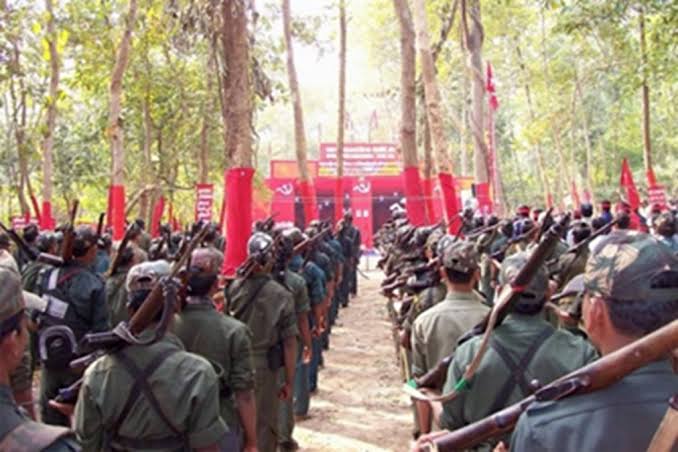
Coordinated operations and development programs have led to a significant fall in insurgent activity. Between 2004–2014 and 2014–2024, security personnel deaths fell from 1,851 to 509, while civilian fatalities dropped from 4,766 to 1,495. In 2025 alone, forces neutralised 270 Naxals, arrested 680, and facilitated 1,225 surrenders.
Major operations like Operation Black Forest and mass surrenders in Chhattisgarh, Maharashtra, and Bijapur highlight growing confidence among cadres to reintegrate into society.
Enhanced Security Infrastructure
The government has fortified the security grid with 576 new police stations, 336 security camps, and 68 night-landing helipads to improve operational mobility. Naxal-affected districts are now limited to 18, with six most-affected zones remaining.
Advanced technologies, including AI-based analytics, satellite imaging, drone surveillance, and social media monitoring, have strengthened intelligence gathering. Forensic support and scientific investigation techniques have enhanced the precision of counter-insurgency operations.
Disrupting Naxal Finances
Financial networks sustaining Naxal operations have been systematically dismantled. The National Investigation Agency (NIA) seized assets worth over ₹40 crore, while the Enforcement Directorate (ED) recovered ₹12 crore. State-level seizures added another ₹40 crore, weakening insurgents’ operational and psychological capabilities.
Capacity Building & State Support
The Security Related Expenditure (SRE) scheme has released ₹3,331 crore to affected states over the past 11 years, a 155% increase from the previous decade. The Special Infrastructure Scheme (SIS) sanctioned ₹991 crore to strengthen special forces and build fortified police stations. Developmental projects under SCA and ACALWEMS have further empowered local communities with health, education, and infrastructure support.
Infrastructure & Development
Over 12,000 km of roads have been completed in Naxal-affected areas, while mobile connectivity has expanded through thousands of 2G and 4G towers. Financial access improved with 1,007 bank branches, 937 ATMs, and nearly 6,000 banking correspondents.
Skill development programs, including 48 Industrial Training Institutes and 61 Skill Development Centres, are providing livelihood opportunities for youth transitioning from conflict zones, ensuring social and economic integration.
Neutralising Naxal Networks & Rehabilitation
The “Trace, Target, Neutralise” strategy has reclaimed areas like Budha Pahar, Parasnath, Baramsia, Chakrabandha, and Abujhmaad. In 2024 alone, 26 major encounters neutralised top cadres including Zonal, State, and Divisional Committee members. The PLGA was forced to abandon strongholds in Bijapur and Sukma.
Rehabilitation programs encourage surrendered cadres to reintegrate with financial support: ₹5 lakh for high-ranking, ₹2.5 lakh for mid/low-rank members, plus a ₹10,000 monthly stipend for 36 months of vocational training.
Conclusion
Under Prime Minister Narendra Modi’s leadership, India’s integrated approach has combined robust security measures, technological advancements, infrastructure development, and rehabilitation programs to effectively combat Naxalism. With sustained efforts, the nation is on track to achieve a Naxal-free India by March 2026, reflecting a decade of decisive governance and commitment to peace.