 European military study validates India’s operational edge
The CHPM report highlights that India controlled both the pace and ceiling of escalation during the 88-hour engagement. By protecting critical air-defence infrastructure and denying Pakistan any decisive operational success, India emerged with a clear military advantage.
The study underwent institutional review by senior European defence experts, including former Swiss Air Force officials and nuclear doctrine specialists, lending further credibility to its conclusions.
A decisive shift in India’s crisis-response doctrine
The report notes that India’s response following the Pahalgam terror attack marked a significant departure from previous crisis-management approaches. Political leadership under Prime Minister Narendra Modi authorised deep strikes against terror infrastructure linked to Jaish-e-Mohammed and Lashkar-e-Taiba inside Pakistani territory.
This strategic shift, the analysis states, reflected India’s intent to impose tangible costs on both terrorist networks and the Pakistani military establishment while retaining firm control over escalation dynamics.
Systematic dismantling of Pakistan’s air-defence network
Following Pakistani strikes on the night of May 7–8, India initiated a pre-planned second escalation phase. The Indian Air Force launched sustained interdiction operations against Pakistan’s air-defence systems, targeting long-range surface-to-air missiles and border surveillance radars.
According to the report, multiple radar sites were neutralised, forcing surviving systems to shut down emissions to avoid detection. This effectively blinded large sections of Pakistan’s airspace awareness.
Precision deep strikes exposed strategic vulnerabilities
In the early hours of May 10, Indian forces executed rapid pre-emptive strikes using long-range munitions, including BrahMos and SCALP-EG missiles, launched from within Indian airspace. Targets included key Pakistani air bases, command-and-control centres, and drone facilities located deep inside Pakistani territory.
The report notes that the strikes demonstrated India’s credible deep-strike capability while remaining below nuclear escalation thresholds.
Pakistan seeks ceasefire after sustained losses
By mid-day on May 10, Pakistan’s military leadership requested a ceasefire following extensive damage to air bases, radar installations, and aerial assets. India accepted the request, having achieved its stated military and political objectives.
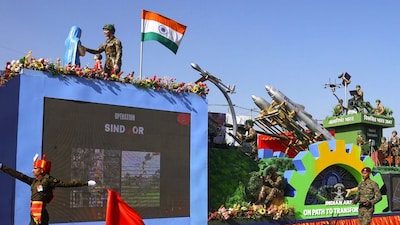
The European analysis concludes that Operation Sindoor marked a turning point in South Asia’s crisis dynamics, underscoring India’s enhanced deterrence posture and operational confidence.