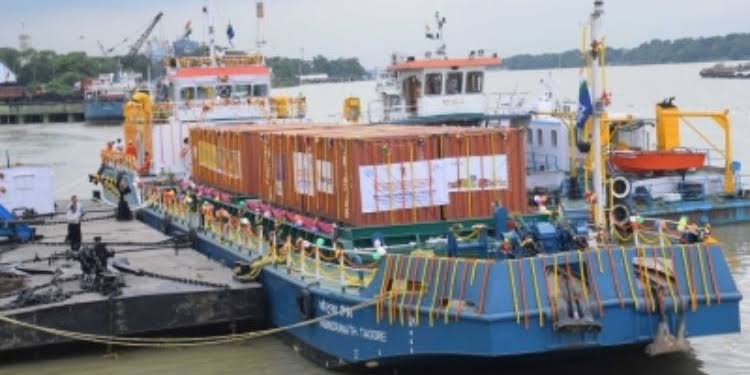
India’s inland waterways are quietly scripting a success story—one that reflects years of perseverance, vision, and an unwavering commitment to sustainable transport. In a proud moment for the Inland Waterways Authority of India (IWAI), cargo traffic on National Waterways reached a record-breaking 145.5 million tonnes in the financial year 2024-25. This milestone, achieved under the Ministry of Ports, Shipping and Waterways, is not just a number—it’s a symbol of transformation in India’s approach to freight logistics.
 Over the past decade, the shift has been remarkable. Cargo movement on National Waterways has grown from a modest 18.10 million tonnes in 2013-14 to this year’s historic high, clocking a staggering compound annual growth rate of 20.86%. This year alone, cargo traffic rose by 9.34% compared to the previous year, with commodities like coal, iron ore, iron ore fines, sand, and fly ash forming the bulk—over two-thirds—of the total cargo moved.
What makes this achievement especially meaningful is the persistent and thoughtful push behind the scenes. It’s not merely about moving goods, but about reimagining how India transports its lifeblood. With proactive policies, infrastructure development, and digital innovation, the government has steadily created the right conditions for this sector to thrive. The number of operational waterways has increased from 24 to 29 in just the past year, opening up new routes and opportunities for trade and transport.
The introduction of the Jalvahak scheme in December 2024 has been a game-changer. By incentivising a shift from road and rail to water transport—covering up to 35% of the actual operating costs—the scheme makes inland waterway transport a financially viable and environmentally sound alternative. Scheduled cargo services now operate on critical waterways such as NW-1, NW-2, and NW-16 via the Indo-Bangladesh Protocol route, with the aim to divert 800 million tonne-kilometers of cargo—a significant step forward for the industry.
In a move to encourage private participation and simplify bureaucratic processes, the IWAI launched a digital portal to obtain No Objection Certificates (NOCs) for constructing terminals and jetties. With the introduction of the National Waterways (Construction of Jetties/Terminals) Regulations, 2025, both public and private stakeholders now have a clearer, faster pathway to invest in inland water infrastructure.
Infrastructure development has kept pace with policy reforms. Fairways are being dredged to ensure navigability, and end-to-end dredging contracts have been implemented. Ro-Ro and Ro-Pax services have been introduced to support smooth passenger and cargo movement, while digital platforms such as CAR-D, PANI, Jalyaan, Navic, and Naudarshika are modernising operations and making inland navigation safer and more efficient.
Behind this success lies a vision led by Prime Minister Shri Narendra Modi and guided by the efforts of Minister Shri Sarbananda Sonowal. Their focus on sustainable growth, ease of doing business, and regional connectivity is enabling IWAI to expand its reach across the country. Focused work is ongoing to boost capacity along major waterways like NW-1, NW-2, NW-3, and NW-16.
The remarkable growth of cargo movement on India’s inland waterways is not just a policy win—it’s a human story of belief in a better, greener future. As infrastructure improves and confidence grows, inland water transport is slowly but surely becoming a preferred, reliable mode of logistics. For a country as vast and varied as India, that shift carries immense promise—for the economy, the environment, and the everyday lives of its people.