 Industrial Growth and IIP Surge
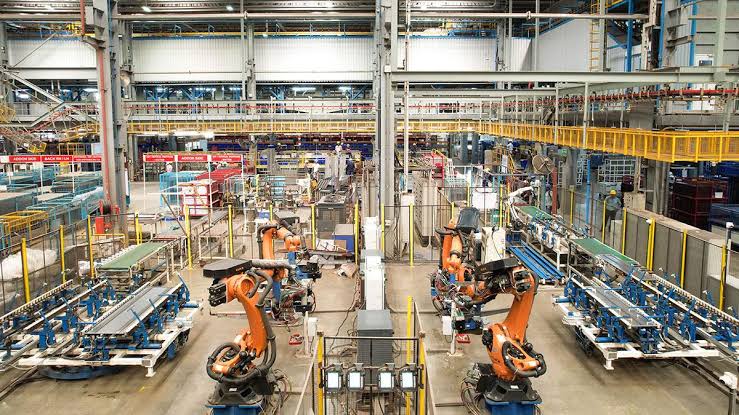
The July IIP figures mark a notable jump from June’s 1.5% growth, reflecting stronger demand and higher capacity utilization. Out of 23 manufacturing groups, 14 posted year-on-year growth. Basic metals (12.7%), electrical equipment (15.9%), and non-metallic mineral products (9.5%) were among the top performers. Complementing this, the HSBC India Manufacturing Purchasing Managers’ Index climbed to 59.3 in August, its highest in 17 years, signalling robust operating conditions.
Exports and Sectoral Drivers
India’s manufacturing exports continue to expand despite global trade headwinds. Merchandise exports touched USD 184.13 billion in April–August 2025, up 2.52% from the previous year. Electronics, pharmaceuticals, automobiles, and textiles have emerged as the engines of growth, together pushing India closer to its target of becoming a USD 1 trillion manufacturing economy by FY26.
Electronics manufacturing has grown sixfold in the past decade, with mobile phone exports rising 127 times to nearly ₹2 lakh crore. India is now the world’s second-largest mobile producer. Pharmaceuticals, backed by PLI and SPI schemes, maintain India’s status as the “Pharmacy of the World,” supplying vaccines and affordable medicines globally. Automobiles contribute nearly half of India’s manufacturing GDP, while textiles employ over 45 million people and benefit from new PM MITRA parks, such as the recently inaugurated one in Madhya Pradesh.
Foreign Investment and Policy Push
Global confidence in India’s industrial base is rising. Between 2014 and 2025, the country attracted USD 748.78 billion in FDI, a 143% jump over the previous decade. In FY25 alone, manufacturing FDI surged 18% to USD 19.04 billion. Maharashtra, Karnataka, and Delhi led in attracting equity inflows, with Singapore, Mauritius, and the United States emerging as top sources.
Policy measures are playing a central role in sustaining momentum. The National Manufacturing Mission aims to unify industrial strategy with a focus on clean technology and sustainability, while GST 2.0 reforms have simplified taxation, reduced costs, and boosted consumption. The National Logistics Policy and Startup India are further strengthening supply chains and entrepreneurial activity.
Employment and Human Capital
Manufacturing remains a key source of job creation. India added 17 crore jobs over the past decade, with manufacturing employment rising 15% during the period. The latest PLFS data shows the unemployment rate easing to 5.1% in August, with male unemployment at a five-month low of 5.0%. Workforce participation among women also improved steadily, supported by targeted skill development schemes worth ₹8,800 crore under Skill India 4.0.
The Road Ahead
As India advances towards its 2047 vision of becoming a USD 35 trillion economy, manufacturing is poised to be the cornerstone of growth. Supported by reforms, robust exports, and resilient supply chains, the sector is building global competitiveness. With strategic policies like PLI, PM MITRA, and the National Manufacturing Mission, India is positioning itself not just to participate but to lead in global manufacturing.