Policy reforms unlocked private sector participation
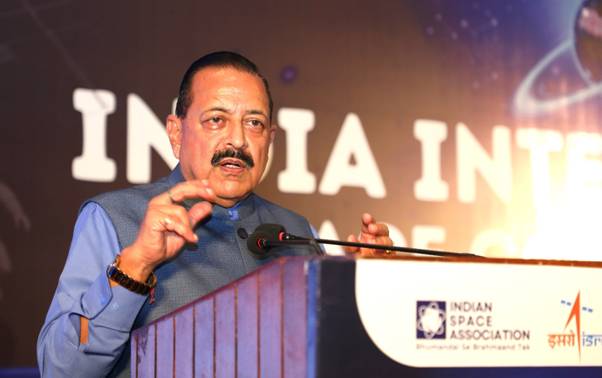
Addressing delegates at the India International Space Conclave (IISC) 2025, Dr. Singh credited reforms introduced since 2019 with transforming India’s space ecosystem. He highlighted the opening of the sector to private players, the establishment of IN-SPACe as a single-window regulator and the 2023 space policy as pivotal measures that created an enabling environment for startups and foreign investors.
“These reforms have allowed talent, technology and capital to converge,” he said, noting a rapid rise in domestic start-ups and growing interest from international delegations visiting India in recent months.
 Innovation, inclusion and resilience: IISC 2025 theme explained
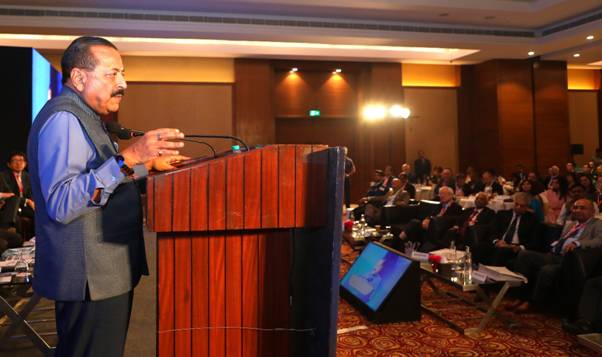
The IISC 2025 theme “Expanding Horizons: Innovation, Inclusion & Resilience in the New Space Age” — captures three shifts in India’s approach, Dr. Singh said. On innovation, he pointed to milestone missions such as Chandrayaan’s south pole landing, the Mangalyaan mission and the efficient launch of multiple payloads in a single mission.
Inclusion reflects how the sector has broadened beyond government laboratories: students, entrepreneurs and ordinary citizens now witness launches, and over 300 space startups have emerged in a short span, many attracting foreign capital and scaling rapidly.
Resilience, the minister added, comes from embedding satellite services into critical governance functions — strengthening disaster response, agriculture forecasting, remote healthcare and infrastructure planning.
Space technology for governance and citizen welfare
Dr. Singh underlined that nearly 70% of India’s space applications now support ease of living, citing concrete examples: Gati Shakti for integrated infrastructure planning, SWAMITVA for land mapping, satellite-enabled disaster management and telemedicine initiatives that extend healthcare to remote regions.
He also highlighted railway safety applications that use satellite data to detect obstructions, and the export of satellite-enabled services to neighbouring countries including Bhutan, Maldives, Sri Lanka, Nepal and Myanmar — an indicator of India’s regional leadership in applied space services.
Private sector surge opportunity and momentum
The minister described a visible surge in private participation: from launch service providers and small-satellite manufacturers to downstream analytics firms. He said delegations from countries such as Japan and Italy, among others, reflect international confidence in India’s space ecosystem.
Dr. Singh credited Prime Minister Narendra Modi’s policy push for dismantling legacy barriers in strategic sectors, creating a platform for faster global engagement and investment.
What’s next for India’s space economy?
With the national space economy projected to grow significantly in the coming years, Dr. Singh urged sustained collaboration among ministries, industry, investors, start-ups and academia. The aim, he said, is to translate India’s scientific prowess into scalable commercial services and resilient public applications.
The Conclave, organised by the Indian Space Association (ISpA), provided a forum for these stakeholders to align on policy, investment and capacity building.