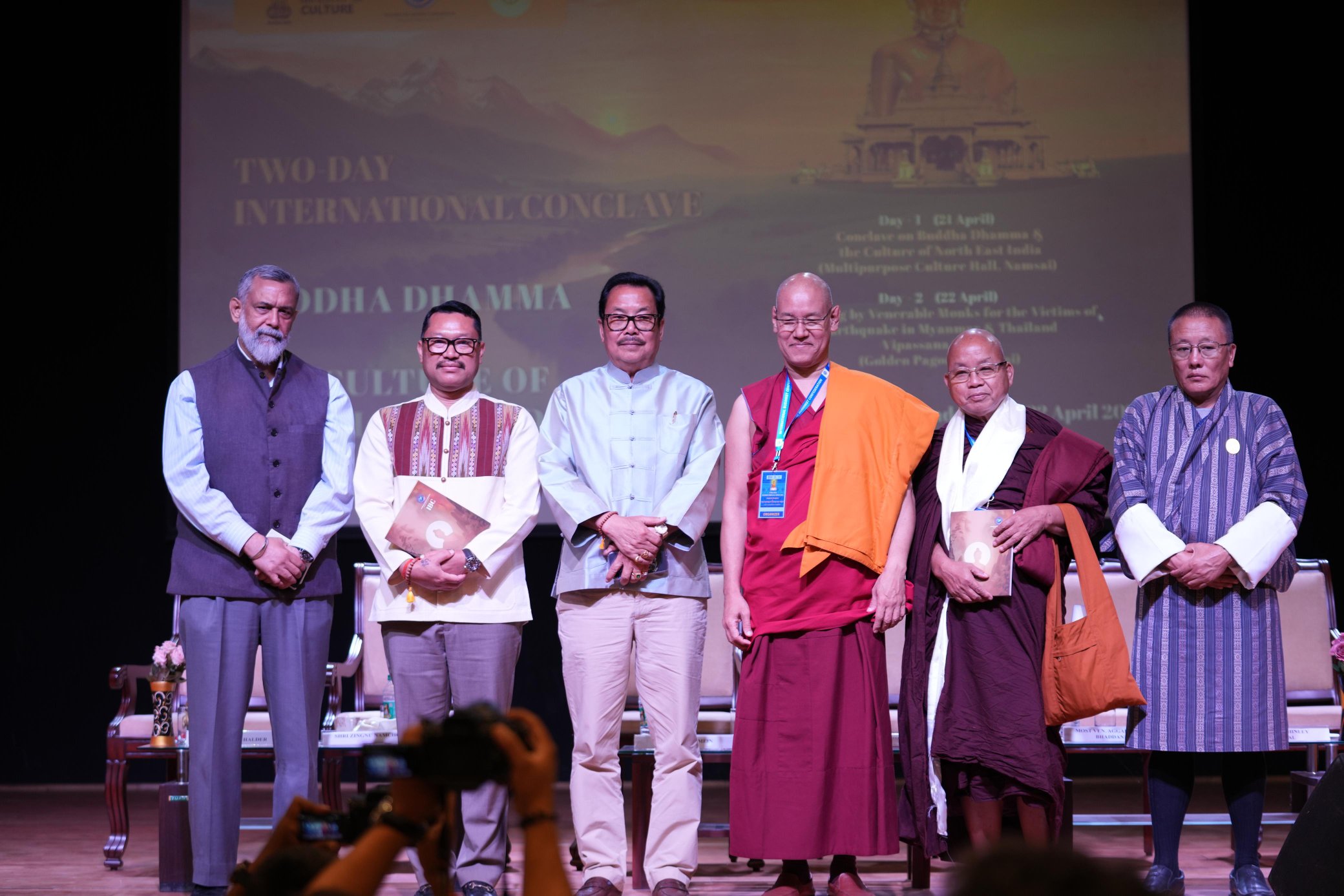
In the serene and culturally rich district of Namsai in Arunachal Pradesh, a two-day International Conclave on Buddha Dhamma and the Culture of North-East India brought together over 300 participants from across India and neighboring countries. Organized by the International Buddhist Confederation (IBC) in collaboration with the Ministry of Culture, the event served as a meaningful platform to celebrate and reflect on the enduring influence of Buddhism in the region.
 Addressing the gathering, Deputy Chief Minister of Arunachal Pradesh Shri Chowna Mein spoke with heartfelt pride about Namsai’s deep-rooted Buddhist traditions and its potential to become a pivotal center for a Buddhist tourism circuit in the North-East. He emphasized that the people of the region, especially his own Tai Khamti community, continue to live by centuries-old Buddhist values. Recalling the recently held Songpa Water Festival—a Buddhist celebration that saw participation from international visitors—he underscored how such festivals offer a unique glimpse into the state’s spiritual and cultural richness.
With emotion and historical perspective, Shri Mein reminded attendees of the Anglo-Khamti war of 1839, in which his tribe fought valiantly against British forces, marking one of the earliest uprisings in the country’s struggle for independence. The tragic aftermath saw the burning of villages and the scattering of the Khamti people, yet their cultural identity and spiritual heritage endured. Their preservation of the Pali language through the Khamti script (Lic Tai), alongside the Bhoti script, stands as a living testament to their commitment to heritage. Ancient epics like the Ramayana and Mahabharata have even been recorded in this script, highlighting its literary significance.
He also acknowledged the Mahabodhi Society’s ongoing work in the region, especially its role in spiritual and social upliftment. Expressing hope for a skill development center, he envisioned a future where local youth could benefit from both cultural pride and modern opportunities.
The conclave witnessed participation from heads of Sanghas, Bhikkus, Bhikkhunis, academicians, and dignitaries from Bhutan, Myanmar, and Cambodia. The inaugural session was graced by the presence of Mr. Jigme Thinly Namgyal, Consul General of Bhutan in Guwahati, who addressed the congregation with words of solidarity and spiritual reflection.
Namsai MLA Mr. Zingnu Namchoom offered a touching insight into the daily lives of the local community, explaining how Buddhist teachings influence everything—from social customs to wedding rituals. “Our dharma is our culture; it is our way of life,” he said, underscoring how deeply Buddhism is woven into the identity of the people.
The dhamma address was delivered by Most Ven. Aggadhamma Bhaddanta, Chief Abbot of the Pariyatti Sasana Buddha Vihara, Namsai. IBC Secretary General Shartse Khensur Jangchup Choeden Rinpoche extended a warm welcome to all, while Director General Mr. Abhijit Halder offered a detailed overview of the conclave and shared closing thoughts.
The two-day gathering will continue with sessions exploring the historical relevance of Buddha Dhamma in the North-East, the art and heritage of Buddhist communities, and the cultural impact of Buddhism in the region. A special prayer and chanting session will be held at the Golden Pagoda to honor the victims of the recent earthquake in Myanmar and Thailand, followed by a contemplative session on Vipassana.
The conclave not only celebrated shared heritage but also kindled a sense of unity, resilience, and hope among the participants—drawing attention to the spiritual legacy that continues to illuminate lives in this remote yet deeply sacred corner of India.