 U.S.-Israel Offensive and Iranian Response
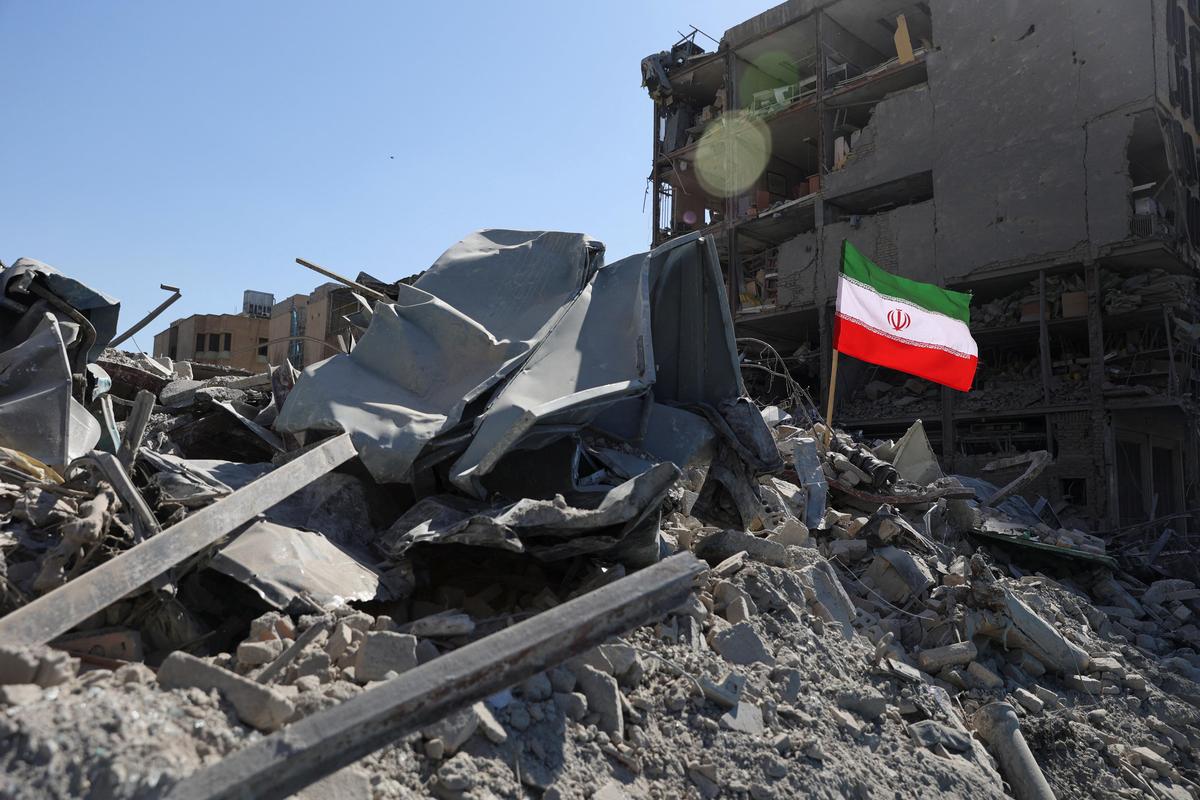
According to Admiral Brad Cooper of U.S. Central Command, American forces have “severely degraded Iran’s air defences and destroyed hundreds of ballistic missiles, launchers, and drones.” Israel’s military confirmed that its strikes targeted Iranian missile launch sites, air defence systems, and critical infrastructure.
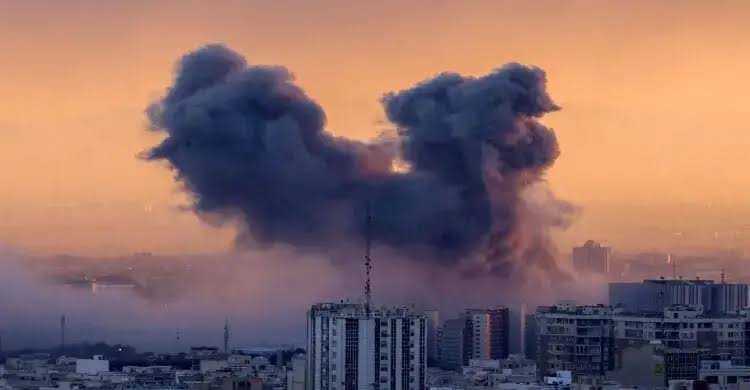
Earlier, Iran had fired multiple ballistic missiles at Israel, causing minor injuries in Tel Aviv. Israel retaliated against Iranian missile installations and a nuclear research facility. The conflict has spread beyond Iran, with Hezbollah targeting Israel’s Haifa naval base, while Israel conducted air raids south of Beirut, killing six and wounding eight in Lebanese towns of Aramoun and Saadiyat.
Impact on Regional Security and Oil Markets
The intensifying conflict has raised fears of disruptions in maritime trade, particularly through the Strait of Hormuz, a critical chokepoint for global oil shipments. President Donald Trump stated that the U.S. Navy is prepared to escort oil tankers through the strait to ensure uninterrupted supply. French President Emmanuel Macron has deployed the aircraft carrier Charles de Gaulle to the Mediterranean and is seeking a coalition to protect shipping lanes threatened by the escalation.
Global oil prices have surged following the attacks, highlighting the far-reaching impact of the U.S.-Israel operations on energy security and international trade.
Indian Response and Safety Measures
The Indian Ministry of External Affairs (MEA) has established a special control room to assist citizens and monitor developments in West Asia. The control room operates from 9 a.m. to 9 p.m. and can be reached via 1800118797 (toll-free) or +91 11 series numbers.
International Reactions
Canadian Prime Minister Mark Carney has urged “rapid de-escalation” of hostilities in West Asia, emphasizing adherence to international law. Meanwhile, U.S. lawmakers were briefed by top national security officials on the evolving operations, which may involve additional American troops in the region.
The assassination of Iran’s Supreme Leader Ayatollah Ali Khamenei has further fueled protests and global concern, as analysts weigh the long-term implications of the conflict on regional power dynamics and nuclear proliferation risks.
Outlook
With airstrikes continuing around the clock and both sides showing no immediate signs of de-escalation, the West Asian crisis remains highly volatile. Observers warn that any disruption to the Strait of Hormuz or escalation in Lebanon and Kuwait could have a cascading effect on global oil supply and geopolitical stability.