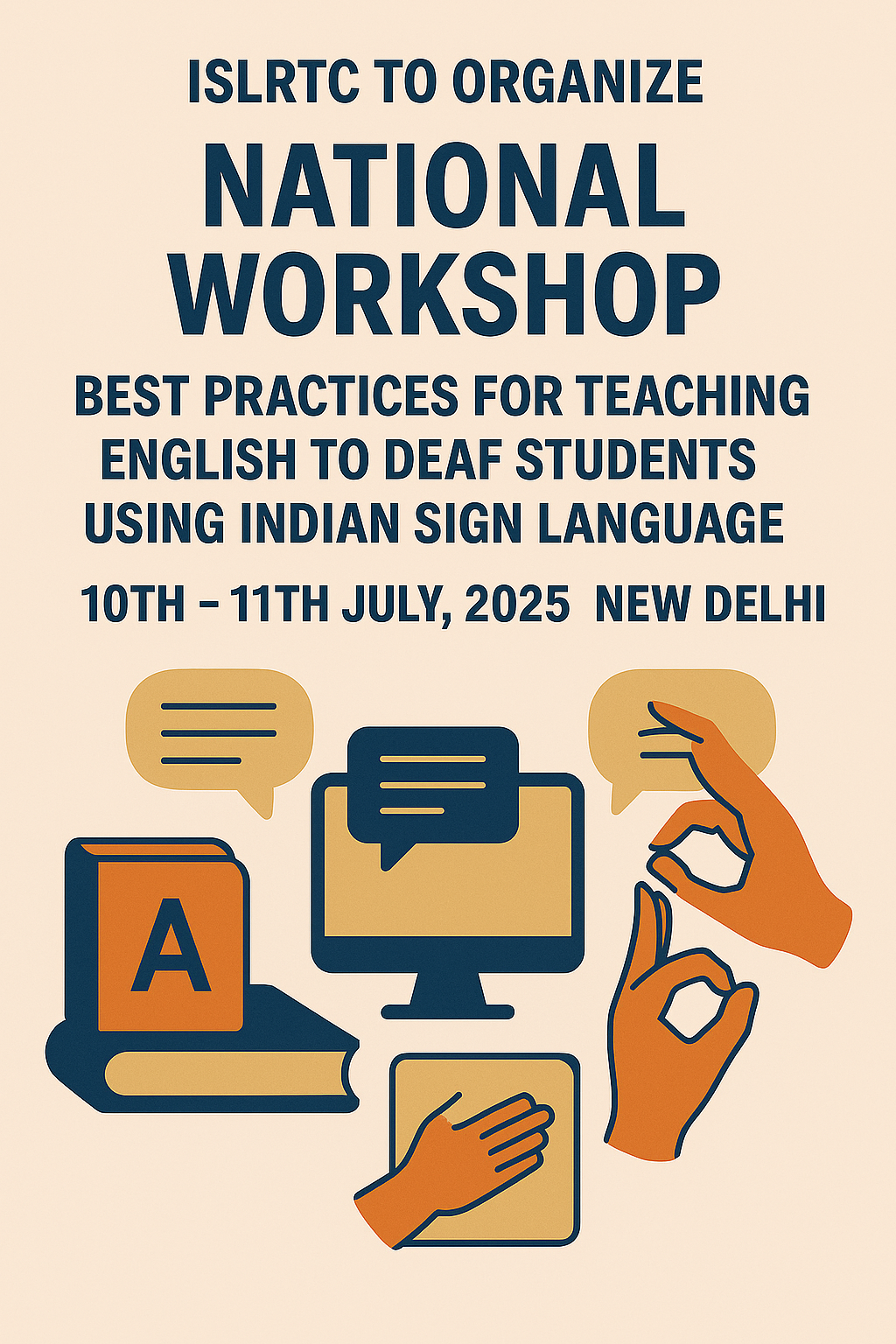
This is the first-ever Continuing Rehabilitation Education (CRE) programme in India that focuses on using Indian Sign Language (ISL) to enhance English literacy for Deaf students.
 A First in India: Sign Language Meets English Literacy
Organized by ISLRTC, an autonomous body under the Department of Empowerment of Persons with Disabilities (DEPwD), the event marks a major step in inclusive education for the Deaf community in India.
Shri Rajesh Aggarwal, Secretary (DEPwD), will inaugurate the two-day workshop. Experts will explore how Indian Sign Language can help bridge gaps in English reading and writing skills among Deaf students.
Why This Workshop Matters
The workshop aims to refine pedagogical approaches for teaching English using ISL. This includes revising the Basic English modules (Part 1 & 2) of the Diploma in Teaching Indian Sign Language (DTISL).
According to the Press Information Bureau, the insights gained here will be crucial for developing inclusive academic strategies, especially for students who struggle with English literacy.
National and Global Experts Come Together
The event brings together a powerful line-up of educators, researchers, and Deaf advocates, both from India and abroad. Notable speakers include:
- Dr. Sibaji Panda – Founder of Happy Hands School for the Deaf, expert in English literacy for Deaf students.
- Shri Sunil Sahasrabudhe – Bilingual education specialist with 20+ years of experience.
- Shri Rajesh Ketkar – Former Director, ISHARA Foundation.
- Shri Hari Hara Kumar – Deaf Enabled India, with expertise in literacy and employment.
- Ms. Sharayu Kadam – English Development Program, TEACH, Mumbai.
- Ms. Chithra Prasad – NISH, Kerala; 15+ years in Deaf education.
- Mr. Abbas Ali Behamanesh – Educator from Gallaudet University, USA (joining online).
Engaging Format for Deeper Learning
The sessions will include presentations, live demonstrations, interactive discussions, and group activities. This hands-on approach ensures that teachers and trainers walk away with practical strategies.
Attendees include ISL instructors, Master Trainers from National Institutes and Composite Regional Centres (CRCs), English teachers from Deaf schools, and representatives from NIOS, NCERT, and other educational bodies.
Filling the Literacy Gap
Deaf students often face challenges in reading and writing English due to the language barrier. Traditional methods don’t always work. Indian Sign Language provides a visual bridge to understanding English.
Workshops like this bring awareness to the issue and offer solutions that are both inclusive and effective.
Building Inclusive Classrooms with ISL
The event also emphasizes ISLRTC’s broader goal—to empower teachers and create learning environments that respect linguistic and cultural differences in the Deaf community.
By focusing on bilingual teaching methods and real-life learning needs, the workshop builds capacity for institutions that serve the Deaf.
A Vision for the Future of Deaf Education
The outcomes from this workshop will contribute to future improvements in the DTISL curriculum. It also sets a precedent for similar programmes across India in the future.
This aligns with the government’s long-term goal of promoting accessible and equitable education under the National Education Policy (NEP) and the Rights of Persons with Disabilities (RPwD) Act.
Conclusion: Small Steps, Big Impact
The ISLRTC’s national workshop is more than an academic exercise. It’s a call to action for creating a more inclusive, effective, and compassionate education system for India’s Deaf students.
By investing in sign language-based literacy education, the government is not only promoting equal opportunity but also laying the foundation for a more inclusive India.
When Deaf students are taught in the language they understand best, they don’t just learn—they thrive.