 Rapid Progress Since 2019
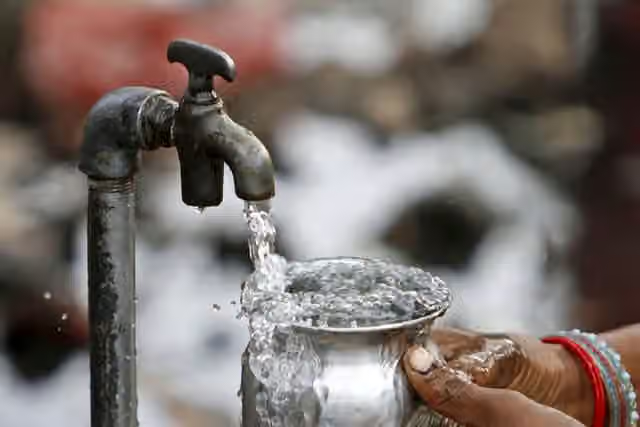
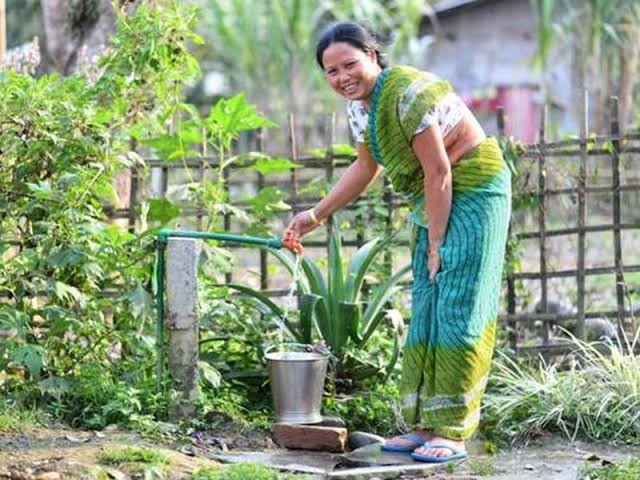
At the mission’s launch, only 3.23 crore households had access to tap water. In just six years, an additional 12.48 crore homes have been connected. The central government allocated ₹2.08 lakh crore for the mission, supporting States and Union Territories in developing sustainable water infrastructure. This expansion has also generated employment, with nearly 3 crore person-years of work created and 25 lakh women trained to test water quality using Field Testing Kits (FTKs).
Districts, Villages, and Schools Covered
Tap water has reached all households, schools, and Anganwadi centres in 192 districts, with 116 certified through Gram Sabha verification. Coverage includes 1,912 blocks, 1,25,185 Gram Panchayats, and 2,66,273 villages. Eleven States and Union Territories, including Goa, Haryana, and Telangana, have achieved 100% tap water connectivity for rural households. Institutional coverage extends to 9.23 lakh schools and 9.66 lakh Anganwadi centres.
Quality Assurance and Community Engagement
A robust monitoring system ensures water safety across India. In 2025–26, 2,843 laboratories tested 38.78 lakh samples. Community participation is a key focus, with 24.8 lakh women trained in FTKs to detect contamination at the local level. These initiatives promote ownership and accountability among villages.
Digital Innovations in Water Management
The upgraded Rural Piped Water Supply Schemes (RPWSS) module integrates GIS mapping and PM Gati Shakti to provide real-time dashboards and predictive analytics. Each scheme receives a unique RPWSS ID for transparency and traceability, empowering Panchayats and Village Water & Sanitation Committees to manage water systems efficiently.
Impact on Rural Communities
The mission has transformed rural life. WHO estimates that providing tap connections saves over 5.5 crore hours daily, mostly benefiting women. Universal coverage could prevent nearly 4 lakh diarrheal deaths and avert 14 million Disability-Adjusted Life Years (DALYs), translating to estimated healthcare savings of ₹8.2 lakh crore. Women’s participation in agriculture has increased, and the need for fetching water has dropped significantly, improving health, education, and livelihoods.
Success Stories Across India
Maharashtra: In Mhapan village, women’s self-help groups manage tap water operations, billing, and maintenance, earning ₹1.7 lakh annually and making the scheme financially sustainable.
Nagaland: Communities in Wokha protect water sources with trenches, percolation tanks, and tree plantations, promoting climate resilience and sustainable supply.
Assam: Borbori village eliminated waterborne diseases within two years through piped water supply and hygiene awareness.
Rajasthan: Bothara village implemented a Water Security Plan with check dams and contour trenches, boosting groundwater levels and storage capacity.
West Bengal: The Jal Mitra digital app monitors water supply, tracks functionality, and promotes community participation, replacing fragmented manual processes with real-time data.
Conclusion
The Jal Jeevan Mission is a transformative initiative, turning the vision of Har Ghar Jal into reality. By combining infrastructure, digital innovation, and community engagement, it ensures safe tap water for over 81% of rural households, enhances health, empowers women, creates employment, and promotes sustainable water management.