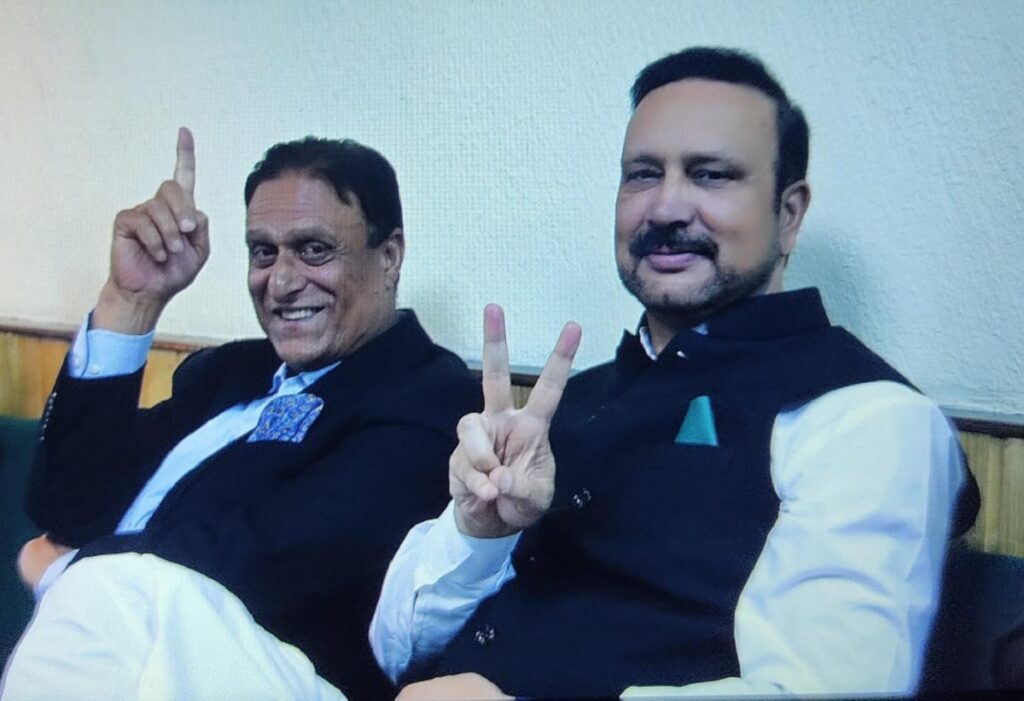
 Choudhary Mohammad Ramzan secured the first seat with 58 votes, defeating BJP’s Ali Mohammad Mir, who received 28 votes from his party MLAs. Sajad Kitchloo won the second seat, and Shammi Oberoi, the party’s treasurer, captured the third seat, becoming the first Sikh MP from Jammu and Kashmir.Sat Paul Sharma of the BJP won the fourth seat with 32 votes, including four cross votes, while the JKNC garnered 22 votes. This election was notable as the first Rajya Sabha election in the Union Territory following the abrogation of Article 370 in 2019 and the subsequent bifurcation of Jammu and Kashmir into two Union Territories.
JKNC expressed congratulations to the three victorious leaders via its official X account. J&K Chief Minister and JKNC vice-president Omar Abdullah also extended his greetings, stating, “Heartiest congratulations to my colleagues Ch Mohd Ramzan Sb, Sajad Kichloo & Shammi Oberoi on their victory in the Rajya Sabha polls. I wish them well as they begin a new innings representing the people of J&K in the Parliament of India.”
Meanwhile, Jammu and Kashmir People’s Conference (JKPC) leader Sajad Gani Lone alleged irregularities, accusing BJP of a “fixed match” in Sat Paul Sharma’s win. Lone highlighted the voting pattern for Shammi Oberoi, claiming that extra votes were polled unnecessarily and questioned the fairness of the process.
The elections were conducted within the Jammu and Kashmir Legislative Assembly complex, following established legislative procedures. No cross-voting was reported in JKNC’s victories, while BJP’s win involved four cross votes, reflecting strategic alliances and political maneuvering in the Union Territory.