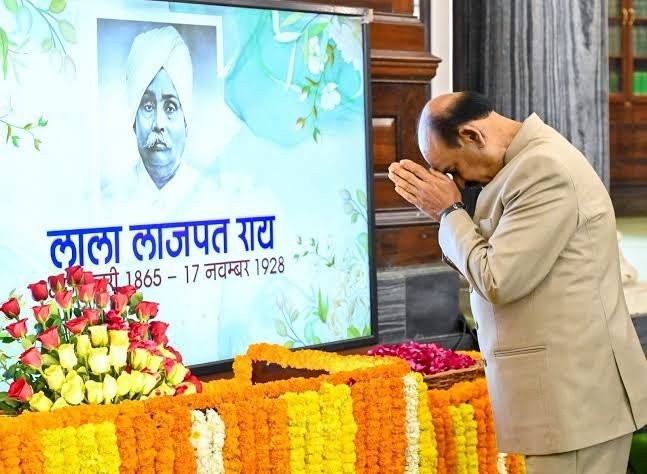
Speaker Om Birla offered floral homage at the portrait and reflected on the enduring relevance of Lala Lajpat Rai’s ideals. He underlined that Rai’s life and work continue to inspire generations of Indians to uphold democratic values, national unity, and social reform.
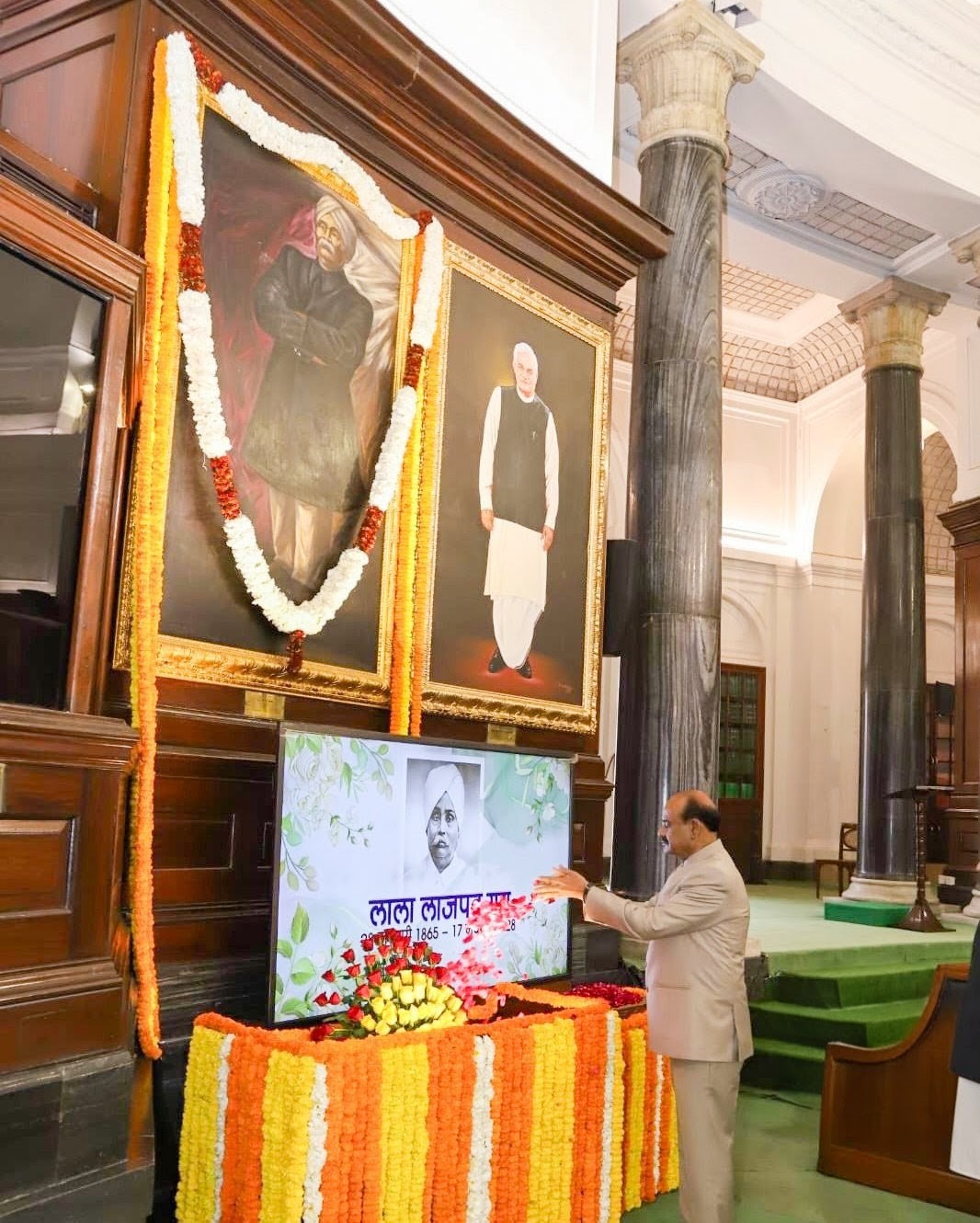 Dignitaries Join in Paying Homage
The solemn occasion witnessed the presence of several senior leaders and dignitaries from across the political spectrum. Union Minister of Health and Family Welfare and Minister of Chemicals and Fertilizers Shri Jagat Prakash Nadda paid floral tributes, acknowledging the immense contribution of Lala Lajpat Rai to India’s struggle for independence.
Deputy Chairman of the Rajya Sabha Shri Harivansh, along with Members of Parliament from both Houses, former MPs, and other distinguished guests, also offered their respects at the portrait. The gathering reflected a shared sense of reverence for the legacy of one of India’s most fearless national leaders.
Secretary-General of the Lok Sabha Shri Utpal Kumar Singh and Secretary-General of the Rajya Sabha Shri P.C. Mody were also present and paid floral tributes, highlighting the institutional respect accorded to freedom fighters who shaped modern India.
Booklet on Lala Lajpat Rai Released
As part of the commemorative event, a booklet detailing the life and contributions of Lala Lajpat Rai was presented to the dignitaries. The publication, brought out by the Lok Sabha Secretariat, has been released in both Hindi and English to ensure wider public access.
The booklet chronicles Rai’s journey as a freedom fighter, educationist, social reformer, and nationalist thinker. It sheds light on his role in the Lal-Bal-Pal trio, his leadership in the Swadeshi movement, and his uncompromising stand against British colonial rule.
Legacy of the Punjab Kesari
Lala Lajpat Rai, born in 1865, was a towering figure in India’s freedom struggle. Known for his fierce nationalism and fearless opposition to colonial injustice, he played a crucial role in mobilising public opinion against British policies.
He is widely remembered for his leadership during the protests against the Simon Commission in 1928. Injured during a brutal lathi charge, Rai later succumbed to his injuries, turning him into a martyr whose sacrifice galvanised the freedom movement.
His portrait, unveiled in the Central Hall on November 17, 1956, by India’s first Prime Minister Pandit Jawaharlal Nehru, stands as a reminder of the values of sacrifice and patriotism that underpin India’s democratic institutions.
Nation Remembers a Freedom Icon
The tribute ceremony at Samvidhan Sadan was not merely a formal observance but a reaffirmation of the nation’s commitment to the ideals upheld by Lala Lajpat Rai. Leaders across party lines emphasised that his vision of a strong, self-reliant, and just India remains deeply relevant.
As India continues its democratic journey, the remembrance of leaders like Lala Lajpat Rai serves as a guiding light for policymakers and citizens alike. His life continues to inspire courage, integrity, and service to the nation.