MoPR & IIM-Ahmedabad Launch Training to Boost Panchayat Revenues
New Delhi, June 24, 2025: In a significant step towards strengthening rural self-governance, the Ministry of Panchayati Raj (MoPR) has joined hands with the Indian Institute of Management (IIM) Ahmedabad to train Panchayats in generating their Own Source Revenue (OSR). The initiative aims to transform Gram Panchayats into financially independent institutions equipped to fund their local development needs.
 Empowering Panchayats to Become Financially Self-Reliant
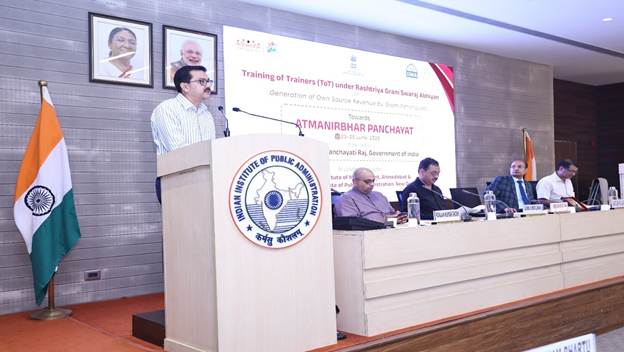
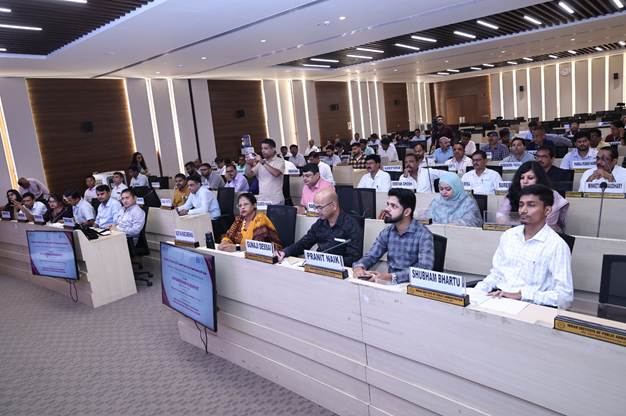
The three-day Training of Trainers (ToT) program was inaugurated by Shri Vivek Bharadwaj, Secretary, MoPR, at the Indian Institute of Public Administration (IIPA), New Delhi. Master Trainers from 16 States and Union Territories participated, along with IIM faculty and senior officials. This initiative is part of the Rashtriya Gram Swaraj Abhiyan (RGSA), which promotes capacity building and institutional strengthening of Panchayati Raj Institutions.
In his keynote, Shri Bharadwaj emphasized the need for Atmanirbhar Panchayats, highlighting OSR as a cornerstone. “Revenue generation reflects not just fiscal strength but the leadership and credibility of Panchayats,” he stated, urging trainers to translate learnings into localized action plans back home.
Curriculum Designed by IIM Ahmedabad
The training modules, developed by IIM Ahmedabad, focus on:
- Understanding foundations of OSR
- Behavioural science in tax collection
- Revenue planning and forecasting
- Innovative financing options
- Project management for GPDP implementation
Prof. Ranjan Kumar Ghosh from IIM-A praised the program’s practical orientation. “This is not just about administration—it’s about empowering Panchayats to lead development,” he said.
Key Innovations in Panchayat Revenue Generation
Shri Sushil Kumar Lohani, Additional Secretary, MoPR, shared plans for a Model OSR Rules Framework and a customizable Digital Tax Collection Portal. These tools are designed to increase transparency and make revenue processes more efficient at the village level.
Examples from Odisha, Gujarat, Maharashtra, Uttar Pradesh, and the Andaman & Nicobar Islands were showcased, demonstrating how local innovations—like community participation in budgeting and tech-driven tax collection—are already making a difference.
Looking Ahead: A Multiplier Effect
This program, currently training 65 Master Trainers, will be followed by a second ToT in July 2025. These trainers are expected to conduct similar sessions in their home states, creating a multiplier effect across India. The goal is a national network of Panchayat leaders who understand, plan, and mobilize local revenues effectively.
Internal planning models, once tested, will be recommended for scale-up by the Ministry. The focus is not just on short-term improvements, but on sustainable, systemic change in how rural India funds its development.
Conclusion
This landmark initiative reflects India’s commitment to decentralization, transparency, and self-sufficiency. By empowering Panchayats to generate and manage their own resources, the MoPR and IIM Ahmedabad are paving the way for truly autonomous grassroots governance.