 Navi Mumbai International Airport: a new gateway
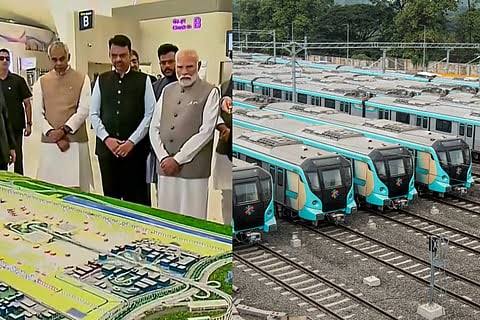
The greenfield Navi Mumbai International Airport, developed through a public-private partnership in which Adani Airport Holdings Ltd. holds the majority stake and Maharashtra’s CIDCO retains a minority stake, spans roughly 1,160 hectares in the satellite city east of Mumbai.
Phase-1 capacity will handle about 20 million passengers annually initially, with planning documents and developer statements projecting eventual capacity of up to 90 million passengers a year as later phases roll out. The airport design follows a lotus-inspired architectural motif and features sustainability measures such as large-scale solar installations, EV bus connectivity and provisions for sustainable aviation fuel storage.
Commercial flight operations are slated to begin in December 2025, according to developer briefings. NMIA is also billed as India’s first major airport to be integrated with a water-taxi connection, enhancing last-mile access from coastal localities.
Metro-3 Aqua Line: South Mumbai goes underground
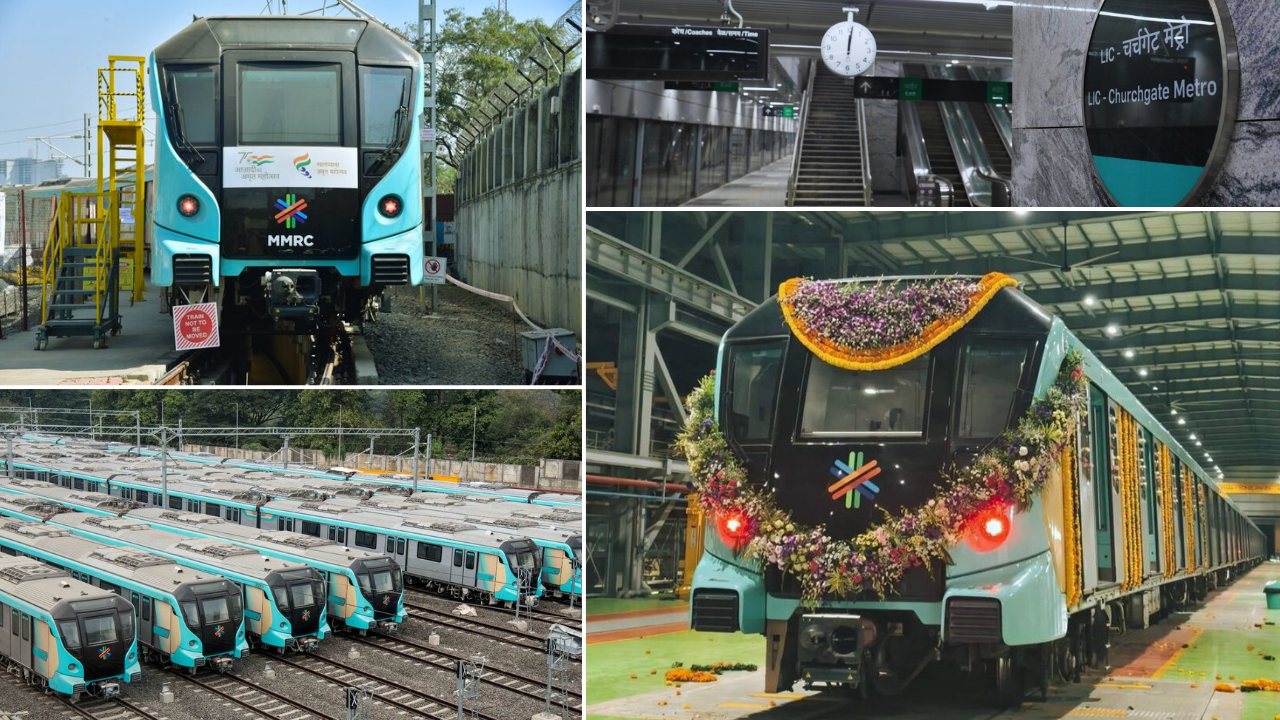
The final segment of Mumbai Metro Line-3 — popularly referred to as the Aqua Line — has been completed, linking the southern peninsula with central and northern suburbs on a fully underground alignment. The line includes more than two dozen stations and connects key business, financial and administrative districts, offering commuters a faster alternative to the overcrowded suburban rail and road network.
Financing for the metro project has involved a mix of domestic and international lenders and development agencies. The fully operational Aqua Line is expected to carry hundreds of thousands of passengers every day, cutting journey times for many cross-city trips and easing pressure on surface traffic.
Integration, digital mobility and skills push
Alongside the physical openings, the government rolled out an integrated mobility app to unify ticketing and journey planning across modes — metro, suburban rail, bus and last-mile services. Officials described the digital tool as a step towards friction-free multimodal travel in Mumbai.
Modi also launched short-term employability and skill-upgrading programmes aimed at channeling local jobs created by large infrastructure projects into the skilled workforce. Training modules include electric vehicle maintenance, solar technology, AI applications and advanced manufacturing skills.
What this means for Mumbai
With NMIA online and Metro-3 fully connected, Mumbai becomes better positioned to attract global finance, corporate headquarters and international traffic. The new airport will relieve capacity constraints at the existing Chhatrapati Shivaji Maharaj International Airport and open new corridors for freight and passenger traffic. The underground metro will reduce congestion, lower vehicular emissions and give commuters a faster, more reliable cross-city option.
Urban planners say the twin projects will also spur real-estate and commercial development in Navi Mumbai and along the metro corridor, though they stress the need for calibrated zoning and public services to manage rapid growth.