 Escalation of Violence
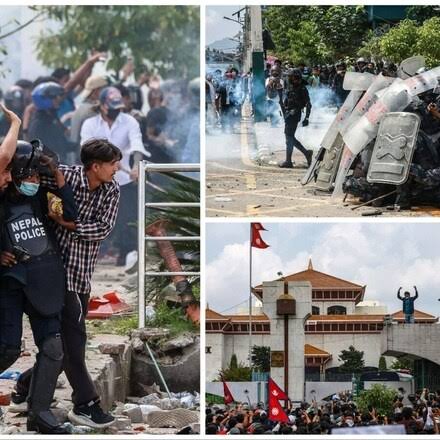
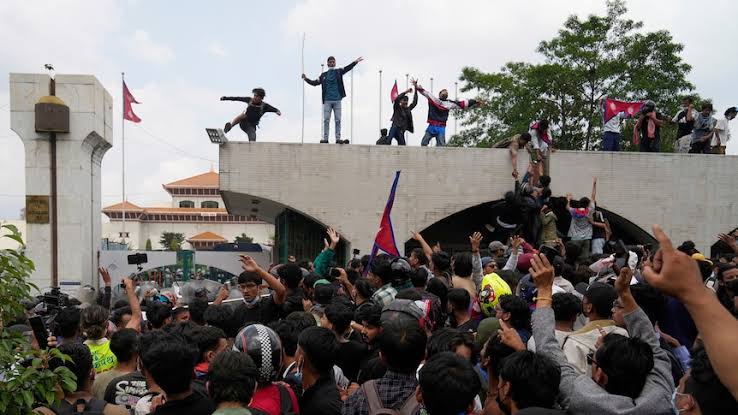
On Monday, thousands of mostly young demonstrators, many still in school and college uniforms, flooded the streets of Kathmandu. They dismantled barricades, hurled stones, and forced riot police to retreat. Clashes intensified near Parliament in New Baneshwor, where protesters vandalized gates and stormed into restricted zones.
The violence soon spread to other cities, including Itahari and Damak, where at least two protesters were killed after police opened fire. Demonstrators set tyres ablaze on highways and even pelted stones at the Prime Minister’s residence in Damak, prompting police to fire warning shots.
Political Fallout
In a major political development, Home Minister Ramesh Lekhak resigned late Monday evening, taking responsibility for the deaths. Reports suggest he tendered his resignation during an emergency cabinet meeting chaired by Prime Minister Oli.
The Oli government now faces mounting pressure both domestically and internationally. Human rights organizations have condemned the excessive use of force, while press freedom groups called the ban “a dangerous precedent.”
India-Nepal Border on Alert
The unrest also prompted Indian authorities to step up vigilance along the Indo-Nepal border. According to ANI, the Sashastra Seema Bal has been keeping strict watch to prevent any spillover of unrest into Indian territory.
India’s Ministry of External Affairs has not yet issued an official statement, but officials are closely monitoring the developments given the large cross-border movement of people between the two countries.
Possible Revocation of Ban
Sources indicated that the government may be reconsidering the sweeping ban. Discussions are reportedly underway to revoke restrictions on platforms that comply with local registration requirements. Platforms such as TikTok and Viber, which had registered, continue to operate in Nepal.
For now, however, the situation remains tense. Curfews are in place in Kathmandu, Butwal, and Bhairahawa, while visuals of chaos have gone viral despite the ban—ironically shared through VPNs and alternative communication apps.