Secretary Reviews Site and Project Design
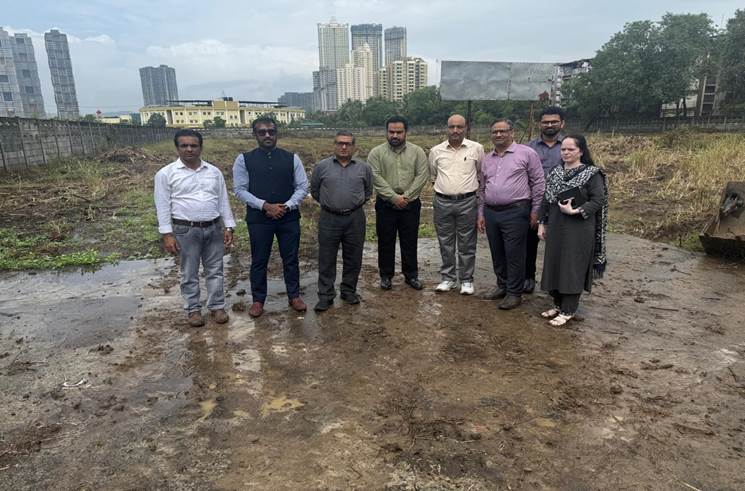
Dr. Chandra Shekhar Kumar, Secretary of the Ministry of Minority Affairs, recently conducted an on-site review of the proposed Haj House location at Kharghar. He was accompanied by officials from the Haj Committee of India (HCoI) and the Central Public Works Department (CPWD).
During the visit, Dr. Kumar examined the design layout, construction plans, and proposed amenities for the upcoming facility. Detailed discussions were held on project timelines, technical specifications, and logistical arrangements to ensure the building caters effectively to the comfort and convenience of Haj pilgrims.
 Focus on Connectivity and Facilities
The new Haj House will be strategically located with easy access to major transportation hubs, ensuring seamless travel for pilgrims from across Maharashtra and neighboring states. The facility is expected to include modern lodging, prayer halls, medical support, and digital service counters to streamline the pre-departure formalities for pilgrims.
Officials also discussed plans for green building standards, accessibility features for senior citizens, and energy-efficient infrastructure to make the complex environmentally sustainable.
Preparations for Haj 2026 Underway
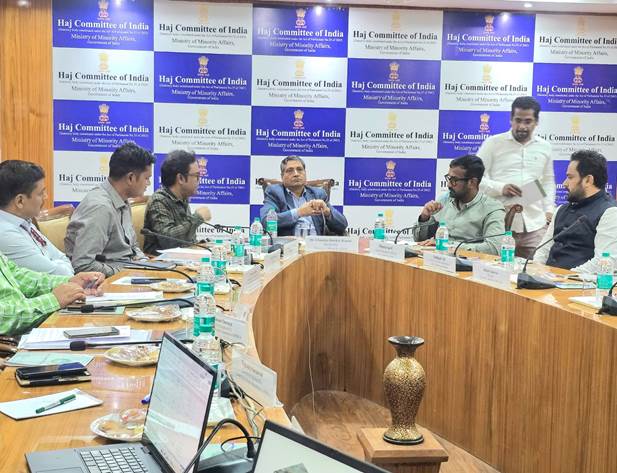
Before his site visit, the Secretary chaired a review meeting in Mumbai with representatives from the HCoI, CPWD, and the Maharashtra Government. The meeting focused on preparatory measures for Haj 2026, including the structural audit and improvement of the existing Haj House in Mumbai.
The discussions emphasized coordination among all stakeholders to ensure a safe, efficient, and inclusive pilgrimage process. Dr. Kumar underlined the government’s commitment to using technology and innovation to simplify pilgrim registration, documentation, and travel management.
Minority Welfare Schemes Reviewed
During his visit, the Secretary also reviewed key minority welfare programs, including the Pradhan Mantri Jan Vikas Karyakram (PMJVK) and Pradhan Mantri Virasat Ka Samvardhan (PM VIKAS) schemes. These initiatives focus on socio-economic empowerment and skill development within minority communities.
Dr. Kumar emphasized the importance of timely project execution, optimal resource utilization, and measurable outcomes to ensure that benefits reach the targeted communities efficiently. He reiterated that infrastructure development, coupled with welfare initiatives, forms a crucial pillar of the Ministry’s inclusive growth vision.
Empowering Communities Through Modern Infrastructure
The new Haj House project reflects the government’s broader strategy to create modern, accessible, and inclusive infrastructure that supports India’s diverse communities. By strengthening pilgrimage facilities and social welfare programs simultaneously, the Ministry of Minority Affairs aims to foster holistic development and empowerment.
Once completed, the Navi Mumbai Haj House is expected to serve as a model for future Haj infrastructure projects across India, setting new benchmarks in comfort, accessibility, and sustainability for pilgrims.