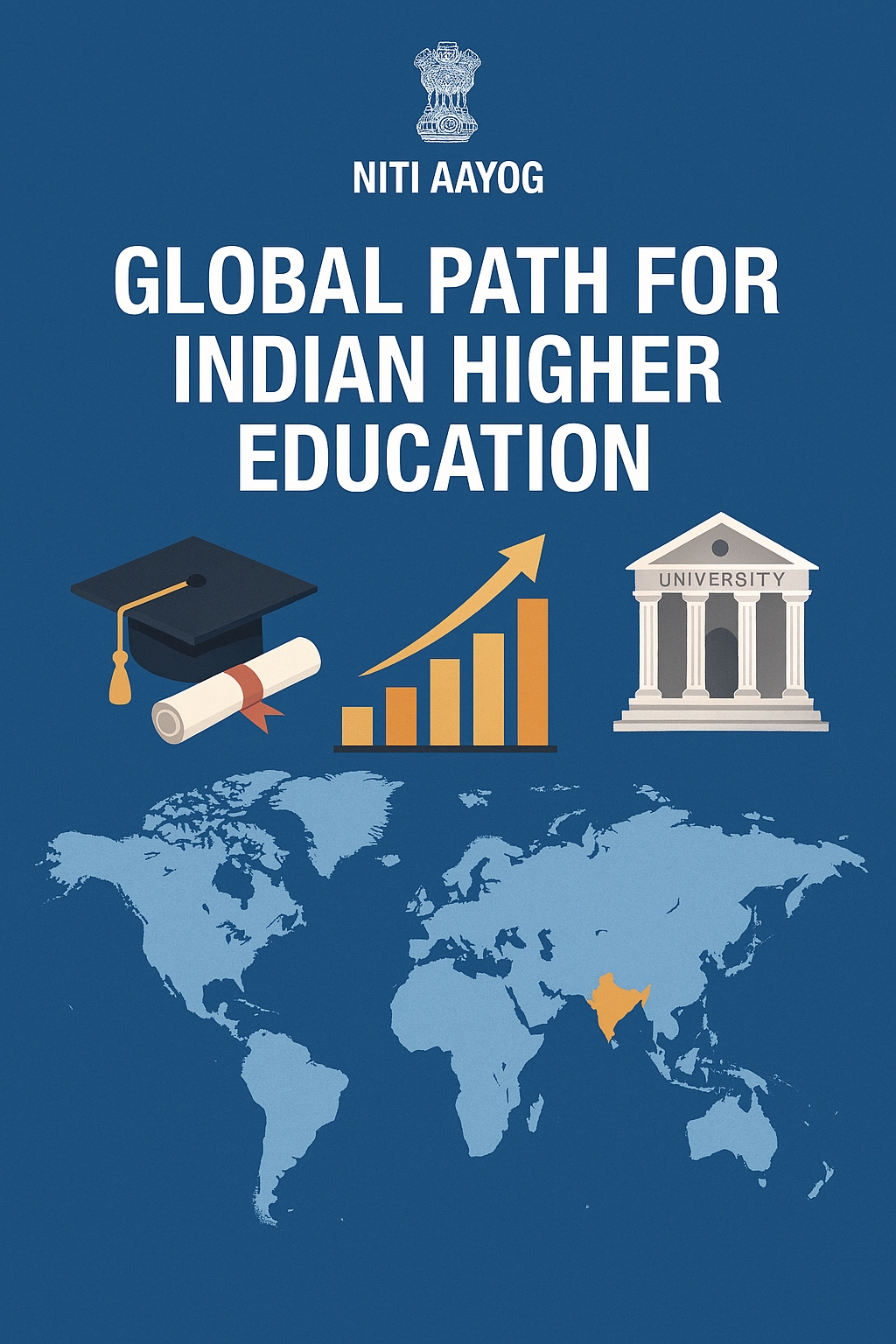
Focus on ‘Internationalisation at Home’
A central theme of the report is “internationalisation at home”, which aims to embed global perspectives within Indian campuses without relying solely on outbound mobility. This includes internationally aligned curricula, joint research programmes, faculty exchange, and cross-border academic collaboration.
The study examines global, national, and institutional approaches to internationalisation and tracks trends in student and faculty mobility over the past two decades. It also explores the feasibility of international branch campuses in India, as well as overseas campuses of Indian universities.
Evidence-Based and Consultative Approach
The report is backed by extensive qualitative and quantitative research. Inputs were gathered through a detailed survey of over 160 Indian higher education institutions across 24 states, covering more than 100 indicators related to international engagement.
Additionally, insights were drawn from a national workshop hosted at IIT Madras, which brought together 140 participants from India and abroad. Key informant interviews with experts from 30 international institutions across 16 countries further enriched the global perspective.
Leadership Views and Strategic Targets
Speaking at the launch, Shri Suman Bery highlighted that internationalisation offers both economic and diplomatic dividends, strengthening India’s soft power globally. Dr. V.K. Paul placed the report firmly within the broader NEP implementation roadmap.
One of the key targets outlined is India hosting one lakh international students across central and state universities by 2030. Dr. Arvind Virmani underscored the role of international alumni in contributing to global and domestic growth, while calling for stronger doctoral programmes through global collaboration.
CEO Shri B.V.R. Subrahmanyam emphasised that internationalisation can improve curriculum quality, reduce foreign exchange outflows, and unlock new research partnerships. He also highlighted the role of private universities, the Indian diaspora, and regulatory ease in achieving these goals.
 Roadmap to 2047
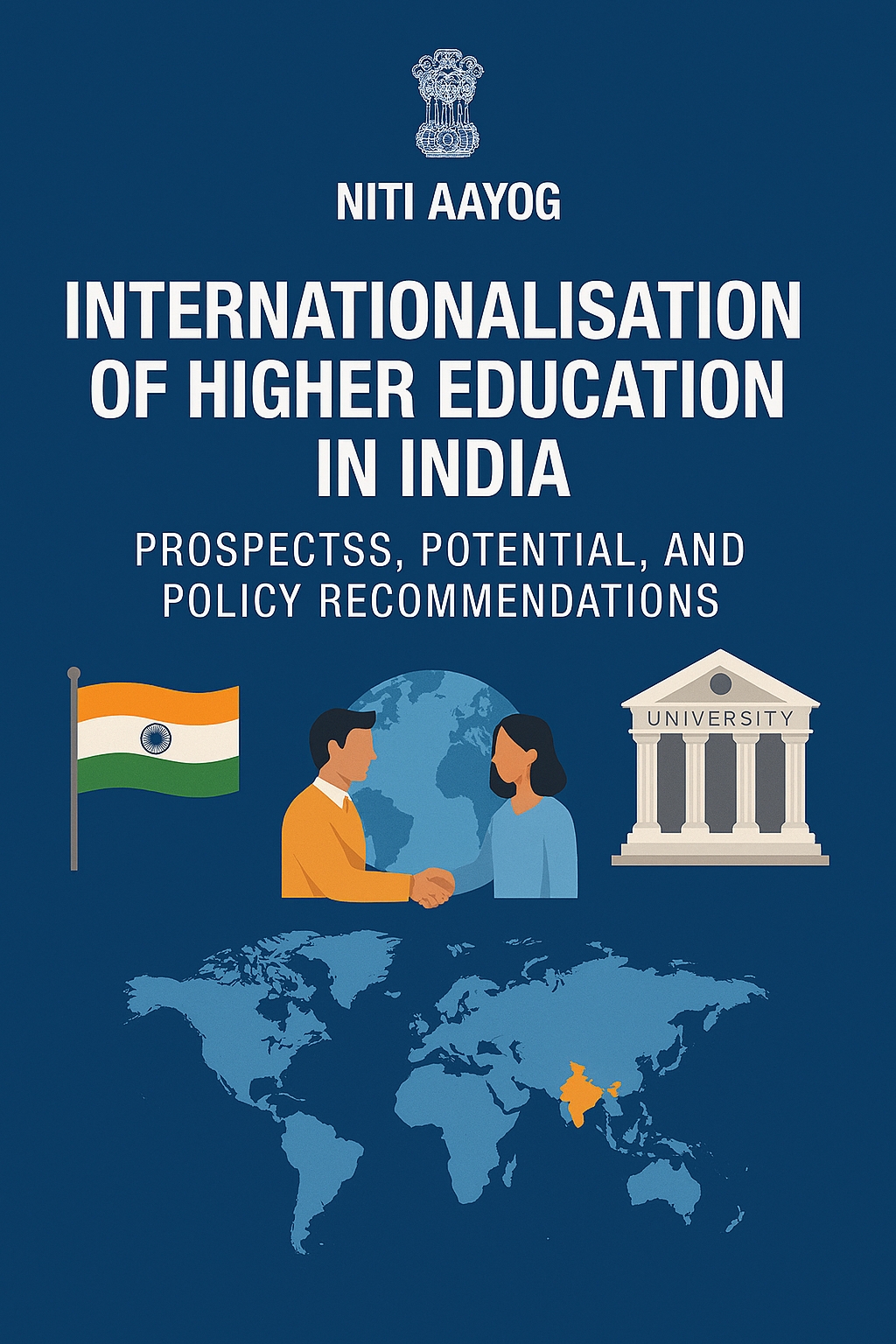
The report presents 22 policy recommendations, supported by 76 action pathways and 125 performance indicators. These are organised across five thematic areas: strategy, regulation, finance, branding and outreach, and curriculum and institutional culture.
According to Dr. Vineet Joshi, Secretary of the Department of Higher Education, recent UGC reforms have already enabled nearly 13 international universities to establish a presence in India. AICTE Chairman Prof. T.G. Sitharam added that India must position itself as a talent magnet, particularly for students from the Global South.
The report is expected to serve as a critical policy reference for governments, regulators, and institutions seeking to position India as a global hub for higher education and research.