 Policy, Innovation, and Community Leadership at the Forefront
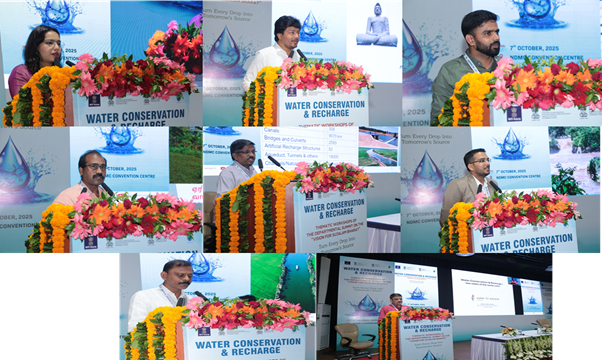
The workshop, attended by over 275 delegates including senior officers, scientists, engineers, and representatives from Panchayati Raj Institutions across Chhattisgarh, Andhra Pradesh, Madhya Pradesh, Tamil Nadu, Kerala, Maharashtra, and Gujarat, showcased innovative water management practices. Ms. Archana Varma, AS&MD and Mission Director, NWM, highlighted the urgent need for sustainable water management in light of climate change impacts, urging collaboration across stakeholders to secure India’s water future.
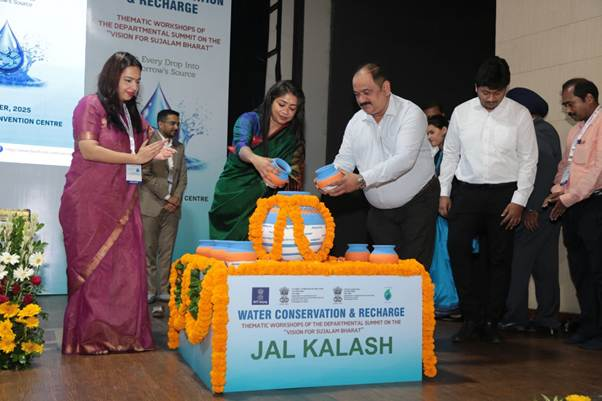
The opening Jal Kalash ceremony symbolised India’s reverence for water as a sacred and life-sustaining resource. Delegates shared experiences and best practices from local communities, ensuring a holistic approach to water conservation and recharge.
Integration with MGNREGA and Rural Water Security
The workshop highlighted the importance of integrating water conservation initiatives with the Mahatma Gandhi NREGA framework. Presentations by Mr. Kiran Padhy, Ministry of Rural Development, and Joint Secretary, NWM, detailed how MGNREGA has supported water management projects over the past 11 years, enabling rural employment while enhancing local water resources. Amendments to Schedule I under MGNREGA were discussed to further strengthen water conservation initiatives in villages.
State-Level Best Practices and Innovations
Delegates presented a diverse range of state-specific water conservation approaches. Ms. Suruchi Singh, CEO, Zila Panchayat, Chhattisgarh, shared GIS-based and community-driven methods used in Rajnandgaon. Andhra Pradesh showcased a centralised water conservation strategy led by Mr. Krishna Kumar Teja Mylavarapu, emphasising innovative local solutions.
Madhya Pradesh focused on groundwater monitoring and inter-departmental coordination under the Jal Ghanana Samardhan Abhiyan. Tamil Nadu highlighted the restoration of traditional irrigation tanks and river paths, while Kerala stressed community-based initiatives to address rapid runoff and flooding.
Gujarat demonstrated demand-side management through micro-irrigation and barrages, alongside innovative geomembrane farm ponds. Maharashtra shared strategies for optimising water demand-supply balance and promoting the LiFE initiative for citizen participation. Community-focused models and technical assistance tools for rural water challenges were highlighted by Mr. Bishwadeep Ghose, Water for People.
Outcomes and Roadmap for Sujalam Bharat
Interactive discussions at the workshop consolidated insights, emphasizing sustainable source management, community-led initiatives, and policy convergence. Outcomes are being compiled as State-Specific Notes and Feedback Notes to feed into the upcoming Departmental Summit, framing a national roadmap for water security and resilience.
The event reinforced the Government of India’s commitment to the Vision for Sujalam Bharat, highlighting that water conservation is not only a policy priority but a national responsibility requiring active citizen participation.