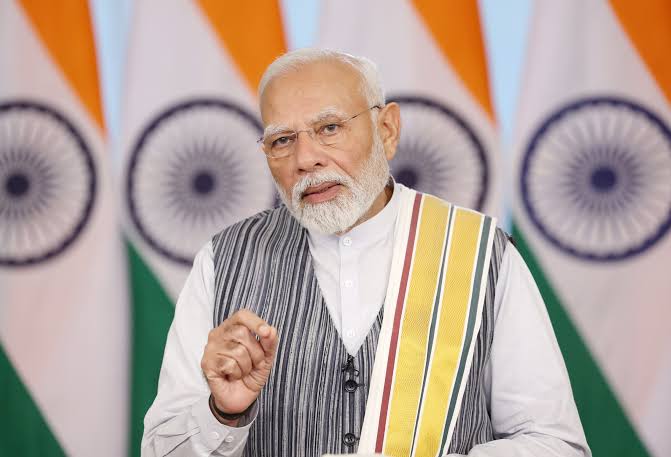
Prime Minister Narendra Modi has once again reaffirmed India’s dedication to a cleaner, greener future. This time, he lauded a powerful sustainability initiative led by the Deendayal Port Authority, Kandla, that directly contributes to India’s ambitious Net-Zero vision.
In response to the port’s post on X (formerly Twitter), the Prime Minister remarked, “This is a commendable effort, championing sustainability and powering our Net-Zero vision.”
India’s Roadmap to Net-Zero by 2070
India has committed to achieving Net-Zero carbon emissions by 2070. This pledge, announced at COP26 in Glasgow, is not just a policy goal—it’s a national mission. Efforts from public and private sectors alike are now aligning to create sustainable infrastructure and reduce the carbon footprint across industries.
Deendayal Port Authority’s latest initiative is a shining example of how green innovation can drive real change at the grassroots level.
 What Did the Port Authority Do?
Though specific project details were not included in the Prime Minister’s tweet, Deendayal Port’s recent steps likely focus on renewable energy integration, waste reduction, and low-emission logistics.
According to earlier press releases, Deendayal Port has been investing in solar power, energy-efficient equipment, digitization, and eco-friendly maritime operations—all of which directly contribute to sustainable port development.
Ports as Pillars of Climate Action
India’s ports are crucial for trade, logistics, and energy. But they’re also major sources of emissions. That’s why the Ministry of Ports, Shipping and Waterways has been promoting the Green Ports initiative, urging all major ports to adopt sustainable technologies and practices.
Deendayal Port’s effort is in sync with this policy shift. By setting a precedent, it inspires other ports to step up and take ownership of their environmental footprint.
Prime Minister’s Vision for a Sustainable Bharat
Prime Minister Modi has always emphasized the need to balance growth with sustainability. From the “Lifestyle for Environment (LiFE)” movement to the launch of the National Hydrogen Mission, he has positioned India as a proactive leader in global climate action.
His endorsement of Deendayal Port’s green initiative is more than symbolic. It’s a strategic nudge for institutions across the country to prioritize green infrastructure and innovation.
Aligning with the Panchamrit Targets
The initiative also aligns with India’s five-fold climate commitments, also known as the Panchamrit:
- Reach 500 GW of non-fossil energy capacity by 2030
- Fulfill 50% of energy needs through renewables by 2030
- Reduce carbon intensity of GDP by 45% from 2005 levels
- Lower total projected carbon emissions by 1 billion tonnes
- Achieve Net-Zero by 2070
Every green project—no matter how small—adds momentum to these national goals.
Industry Leaders React
Climate advocates, industry leaders, and civil society groups have welcomed the Prime Minister’s statement. The Confederation of Indian Industry (CII) noted that such recognition from the top leadership adds value to public-private partnerships focused on sustainability in logistics.
Experts believe that when ports modernize sustainably, it triggers a domino effect in transportation, warehousing, and supply chain management, leading to large-scale emission cuts.
Call for Scalable Green Innovation
The Deendayal Port model, if documented and replicated, could help India’s 12 major ports transition faster to low-carbon operations. It also opens the door for technology startups and innovators to enter the green maritime space.
Whether through smart sensors, AI-based load optimization, or solar-powered cranes, scalable innovations will be key to delivering Net-Zero outcomes.
From Port to Planet: A Collective Responsibility
The Prime Minister’s praise is a timely reminder that sustainability isn’t just a government goal—it’s a shared mission. Citizens, companies, and institutions must collaborate to build a resilient, climate-friendly economy.
With more green milestones like this, India can truly lead the global shift towards clean growth and climate resilience.