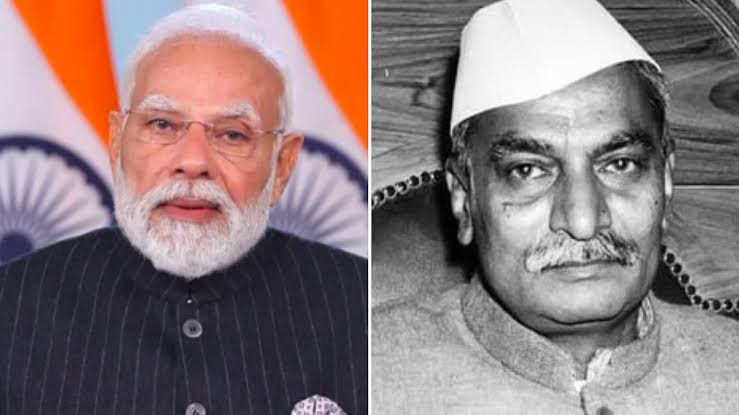
Calling him a symbol of simplicity and moral courage, PM Modi emphasised that Dr. Rajendra Prasad’s vast public life spanning India’s fight against colonial rule to his stewardship of the newly independent Republic continues to inspire generations. His leadership during the formulation of the Constitution and his role as the first President of India remain benchmarks of constitutional responsibility and grace.
 A Statesman Who Shaped India’s Democratic Journey
Dr. Rajendra Prasad, born on December 3, 1884, in present-day Bihar, played a pivotal role in the Indian independence movement. He joined the Indian National Congress early in his political career and emerged as one of Mahatma Gandhi’s closest associates. His commitment to truth, justice and social harmony earned him national respect long before he assumed high office.
During the freedom struggle, Dr. Prasad participated in major movements such as the Champaran Satyagraha, Non-Cooperation Movement and Quit India Movement. His leadership combined scholarship with humility, enabling him to connect with people across social and economic backgrounds.
In 1946, Dr. Prasad was elected President of the Constituent Assembly, a position of immense responsibility. He presided over extensive debates, helped maintain consensus among diverse political leaders and oversaw the adoption of the Constitution of India on 26 November 1949. His role in guiding the Assembly through ideological complexities remains one of the most celebrated chapters in nation-building.
India’s First President and a Model of Constitutional Leadership
When India became a Republic in 1950, Dr. Rajendra Prasad was unanimously chosen as the nation’s first President. His tenure, which lasted from 1950 to 1962, was marked by restraint, dignity and exemplary observance of constitutional boundaries. He is the only President in India’s history to have been elected for two consecutive terms.
Throughout his presidency, Dr. Prasad upheld the principle that the President should act above party lines and safeguard the democratic ethos. His relationship with Prime Minister Jawaharlal Nehru was defined by mutual respect, even when their perspectives differed. His tenure set a precedent for the office, emphasizing neutrality, humility and service.
PM Modi’s Tribute: A Reminder of Enduring Legacy
In his message, Prime Minister Modi wrote, “Tributes to Dr. Rajendra Prasad Ji on his birth anniversary. From being an active participant in India’s freedom struggle, presiding over the Constituent Assembly to becoming our first President, he served our nation with unmatched dignity, dedication and clarity of purpose.” He further added that Dr. Prasad’s lifelong commitment to unity and simplicity continues to offer guidance to the nation.
The Prime Minister’s tribute underscores the continued relevance of Dr. Prasad’s values in contemporary times. As India navigates new economic, technological and geopolitical challenges, the principles of democratic ethics and national integration championed by Dr. Prasad remain vital.
Legacy That Continues to Inspire
Dr. Rajendra Prasad authored several works, including his autobiography “Atmakatha,” which offers deep insight into India’s political evolution and his personal experiences. His writings reflect clarity of thought, humility and unwavering concern for the welfare of ordinary citizens.