 What The Bill Proposes
The Centre earlier this week introduced three significant pieces of legislation — the Government of Union Territories (Amendment) Bill, 2025, the Constitution (One Hundred and Thirtieth Amendment) Bill, 2025, and the Jammu and Kashmir Reorganisation (Amendment) Bill, 2025. Together, these propose automatic removal from office of a prime minister, chief minister, or any minister if they are detained in custody for at least 30 days in connection with an offence carrying a minimum of five years’ imprisonment.
If passed, the new rule would apply uniformly across the Union and the states, signaling a strong attempt to enforce accountability in public office. According to Rijiju, the move underscores the government’s intent to raise ethical standards in governance. The provisions are seen as a bold reform in India’s political system, often criticized for shielding leaders facing criminal charges.
Progress In Parliament
The Lok Sabha on Wednesday referred the three bills to a Joint Committee of Parliament amid loud opposition protests. Home Minister Amit Shah, who introduced the legislation, insisted the government was committed to transparency and accountability. The Rajya Sabha followed suit a day later, approving the creation of a 31-member Joint Committee to study the bills in detail.
The panel includes 21 members from the Lok Sabha and 10 from the Rajya Sabha. It is expected to submit its findings during the upcoming Winter Session in November. The referral to a Joint Committee reflects the contentious nature of the bills, which the opposition has strongly resisted, accusing the government of bypassing established democratic processes.
Political Reactions
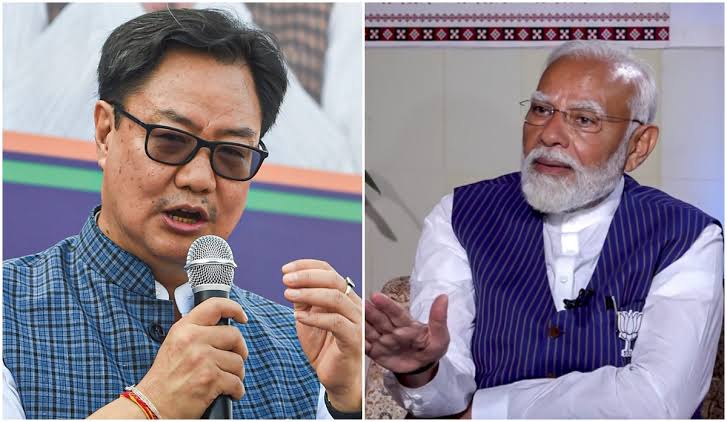
The opposition has raised concerns that the bills may be politically motivated and could be misused against leaders critical of the ruling party. However, Rijiju countered that the legislation is designed to apply equally to all. “Most chief ministers today belong to our party, but that does not mean they will be above the law. If anyone in power faces serious charges and remains in custody, they will have to step down,” he said.
Supporters of the government argue that the bills, if enacted, would set a precedent in cleansing politics of criminal elements. Critics, however, caution that the proposed law could be weaponized for political vendetta, especially given the frequent use of investigative agencies against opposition leaders.
According to the Press Information Bureau, the government believes the legislation will strengthen democratic values by ensuring that leaders in custody cannot continue holding high office while facing grave allegations.
What Lies Ahead
The Joint Committee now holds the responsibility of examining the constitutionality and practicality of the provisions. With the Winter Session approaching, the debate around the bills is expected to dominate the political discourse in the coming months.
By refusing a shield for himself, PM Modi has sought to set an example, but whether the bills will pass in their current form remains uncertain. The outcome will depend on parliamentary negotiations and whether the government can build consensus across political lines.