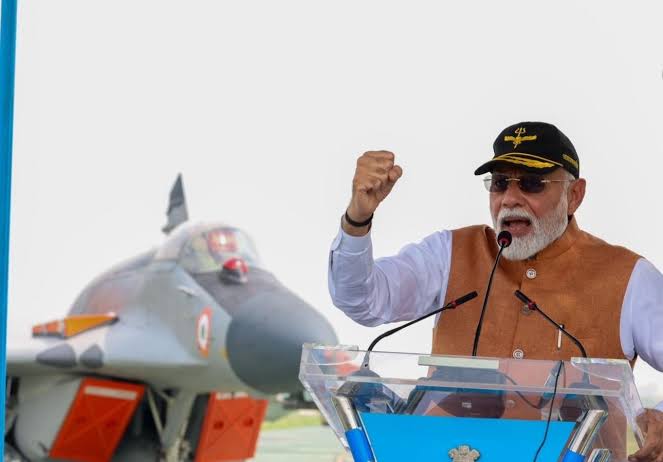
Prime Minister Narendra Modi, in a deeply symbolic and emotionally charged visit to the Adampur Airbase in Punjab, delivered a strong message about India’s unwavering stance against terrorism. With the imposing S-400 missile system in the background, the Prime Minister met with Indian Air Force personnel to commend their bravery during Operation Sindoor and assure the nation that India will respond to future threats with resolve and clarity.
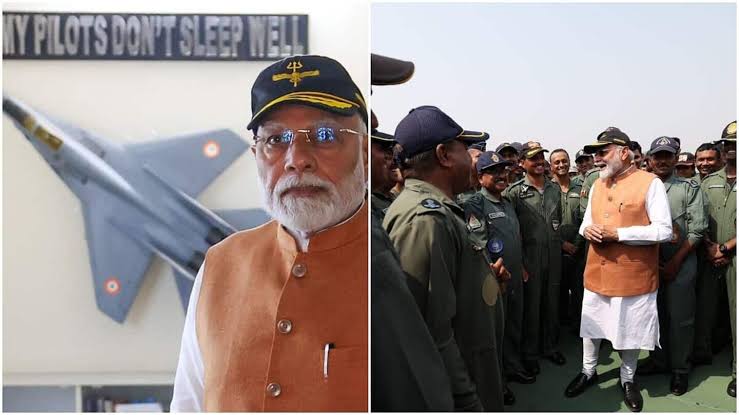
During his early morning visit, which remained confidential until it was underway, Modi emphasized the unity, courage, and technological strength of India’s armed forces. He paid heartfelt tributes to the soldiers, calling them the pride of the nation, and affirmed that the recent military operation was not just a counterstrike, but a statement of India’s intent — that any act of terror would be met with decisive force, on India’s terms.
Modi’s visit came in the wake of a brutal terror attack in Pahalgam, where 26 innocent lives were lost, most of them tourists. The Prime Minister’s words reflected the collective grief of the nation, as well as a commitment that such tragedies will not be tolerated. His message was both a warning to those who harbor terrorism and a comfort to Indian citizens looking for reassurance in turbulent times.
Operation Sindoor, which unfolded from May 7 to May 10, targeted nine terror camps across Pakistan and Pakistan-occupied Kashmir. According to official statements, the operation neutralized over a hundred terrorists. The Prime Minister underlined that this was not merely a tactical mission but a reflection of New Delhi’s new security doctrine — one that does not distinguish between terrorists and the states that support them.
India’s air defence capabilities, he noted, are now robust and deeply integrated, thanks to sustained investments over the last decade. The Indian military, with its blend of modern indigenous systems like the Akash missile and advanced global technologies such as the S-400, is now equipped to deter and defend with unprecedented effectiveness.
Standing before the men and women of the armed forces, Modi praised their restraint during the conflict. Despite Pakistan’s alleged attempts to use civilian air traffic as cover, Indian forces ensured that no harm came to non-combatants — a testament to their discipline and values even in the heat of battle.
Pakistan, during and after the conflict, ran an aggressive disinformation campaign, falsely claiming it had destroyed Indian military assets including the Adampur airbase and several other critical installations. Modi’s visit, along with visible images of intact infrastructure and operational readiness, was a quiet but firm rebuttal to those claims.
The military leadership echoed Modi’s sentiments, crediting recent policy support and budgetary commitments for the seamless execution of Operation Sindoor. Senior air force officials stressed that the Indian defence establishment remains vigilant, prepared, and united in its mission to safeguard the nation.
As the dust settles on the brief but intense standoff, Modi’s message from Adampur resonates as one of resolve, remembrance, and reassurance. It reflects a country unwilling to be provoked into fear, but ready to act with strength and purpose when its peace is threatened.