A Repository of Classical Languages
Granth Kutir houses around 2,300 books and manuscripts written in Tamil, Sanskrit, Kannada, Telugu, Malayalam, Odia, Marathi, Pali, Prakrit, Assamese and Bengali. In October 2024, the Government of India conferred classical language status on Marathi, Pali, Prakrit, Assamese and Bengali, expanding the list beyond the earlier six languages.
The collection spans a wide range of subjects including epics, philosophy, linguistics, governance, history, science and devotional literature. The Constitution of India is also available in several classical languages, highlighting their continued relevance in modern times.
Rare Manuscripts and Ancient Texts
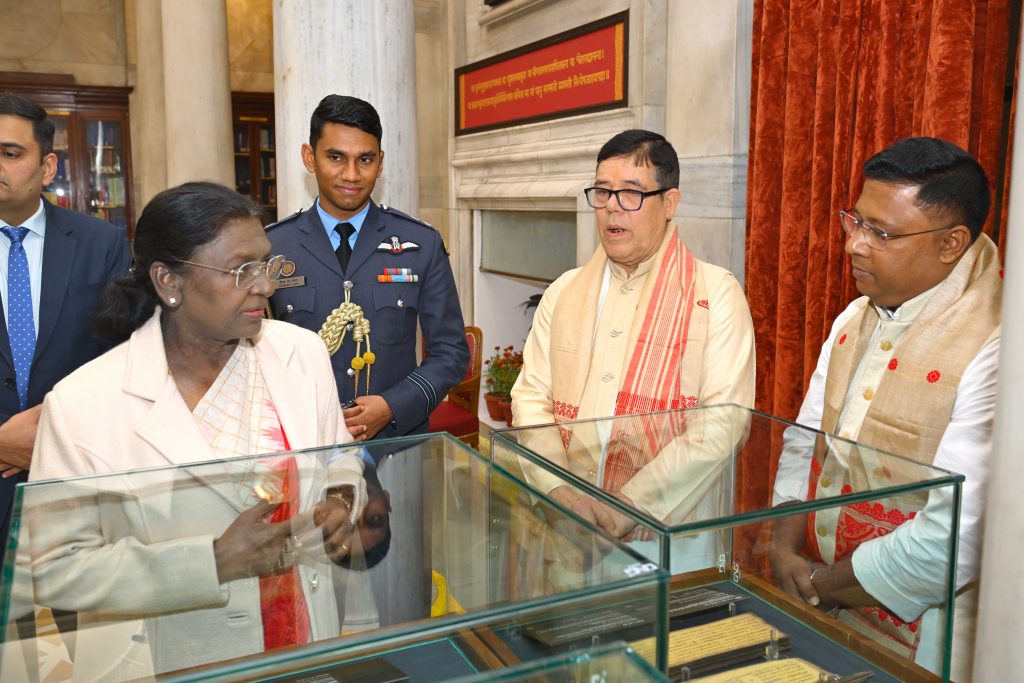
Approximately 50 rare manuscripts form a key part of the Granth Kutir collection. Many of these are handwritten on traditional materials such as palm leaves, bark, cloth and handmade paper, reflecting centuries-old methods of knowledge preservation.
Notable works represented include the Vedas, Puranas and Upanishads in Sanskrit; Tirukkural in Tamil; Mahabharata in Telugu; Kavirajamarga in Kannada; Ramacharitam in Malayalam; Gathasaptasati in Marathi; Vinaya Pitaka in Pali; Jain Agamas and Prakrit inscriptions; and the Charyapadas in Assamese, Bengali and Odia.
Collaborative National Effort
The development of Granth Kutir is the result of collaboration between central and state governments, universities, research institutions, cultural organisations and individual donors from across India. The Ministry of Education and the Ministry of Culture have provided institutional support for the initiative.
The Indira Gandhi National Centre for the Arts (IGNCA) is offering professional expertise in the conservation, documentation and display of manuscripts, ensuring that these invaluable resources are preserved in accordance with global best practices.
Aligned with Gyan Bharatam Mission
Granth Kutir supports the vision of the Gyan Bharatam Mission, a national initiative aimed at preserving, digitising and disseminating India’s vast manuscript heritage. By integrating traditional knowledge with modern technology, the mission seeks to make ancient wisdom accessible to future generations.
The initiative also reflects India’s resolve to move beyond colonial-era narratives and showcase indigenous knowledge systems that embody unity in diversity.
President’s Address
Addressing the gathering, President Murmu said classical languages have laid the foundation of Indian culture and knowledge systems. She noted that disciplines such as mathematics, astronomy, Ayurveda, grammar and philosophy flourished through these languages and continue to guide the world.
Referring to scholars like Panini, Aryabhata, Charaka and Sushruta, the President said their contributions remain relevant even today. She emphasised that the wealth of knowledge in classical languages inspires society to learn from its past and build a confident future.
Public Access and Research Opportunities
Visitors touring Rashtrapati Bhavan Circuit 1 will be able to view select manuscripts and works housed at Granth Kutir. Information about the collection will also be available through an online portal, enabling readers to access digitised books and manuscripts.
Researchers can apply for physical access through the portal. Colonial-era archival books previously stored at the site have been relocated, digitised and will be made available online for scholarly use.
Dignitaries in Attendance
The inauguration ceremony was attended by Minister of State for Culture Shri Rao Inderjit Singh, Minister of State for Education Shri Jayant Chaudhary, subject experts, donors and representatives from various states.