Water as a civilisational priority
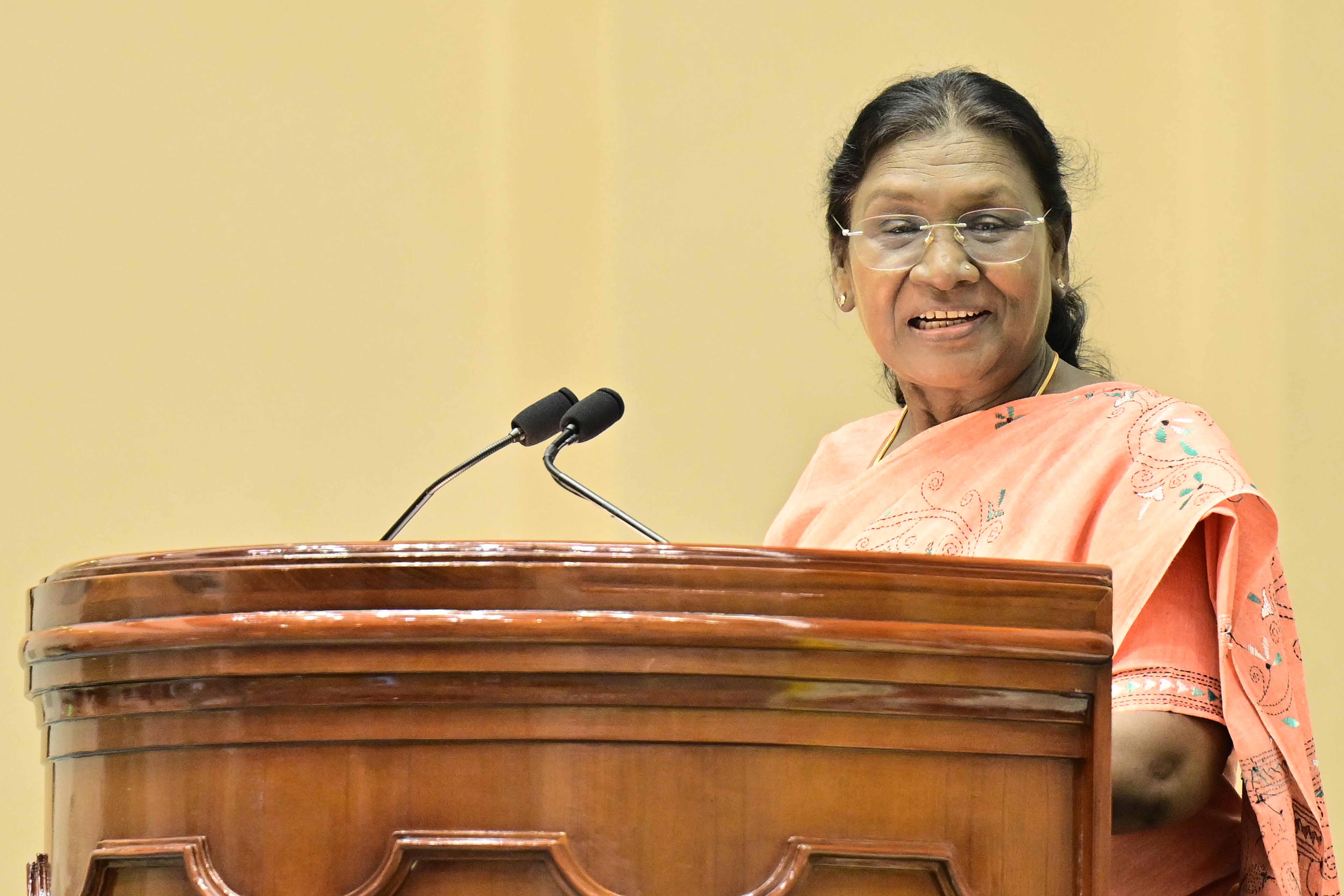
The President traced human settlement patterns to rivers and water bodies, noting India’s cultural reverence for water. “Our national song begins with ‘Sujalam’ blessed with abundant water,” she said, using the phrase to underscore water’s historical and cultural centrality even as per-capita availability shrinks.
Acknowledging climate change’s impact on the hydrological cycle, President Murmu urged sustained vigilance and community action to secure water availability. She emphasised that responsible use and conservation must become part of everyday life, supported by robust public policy and local governance.
 Jal Sanchay–Jan Bhagidari: scale and impact
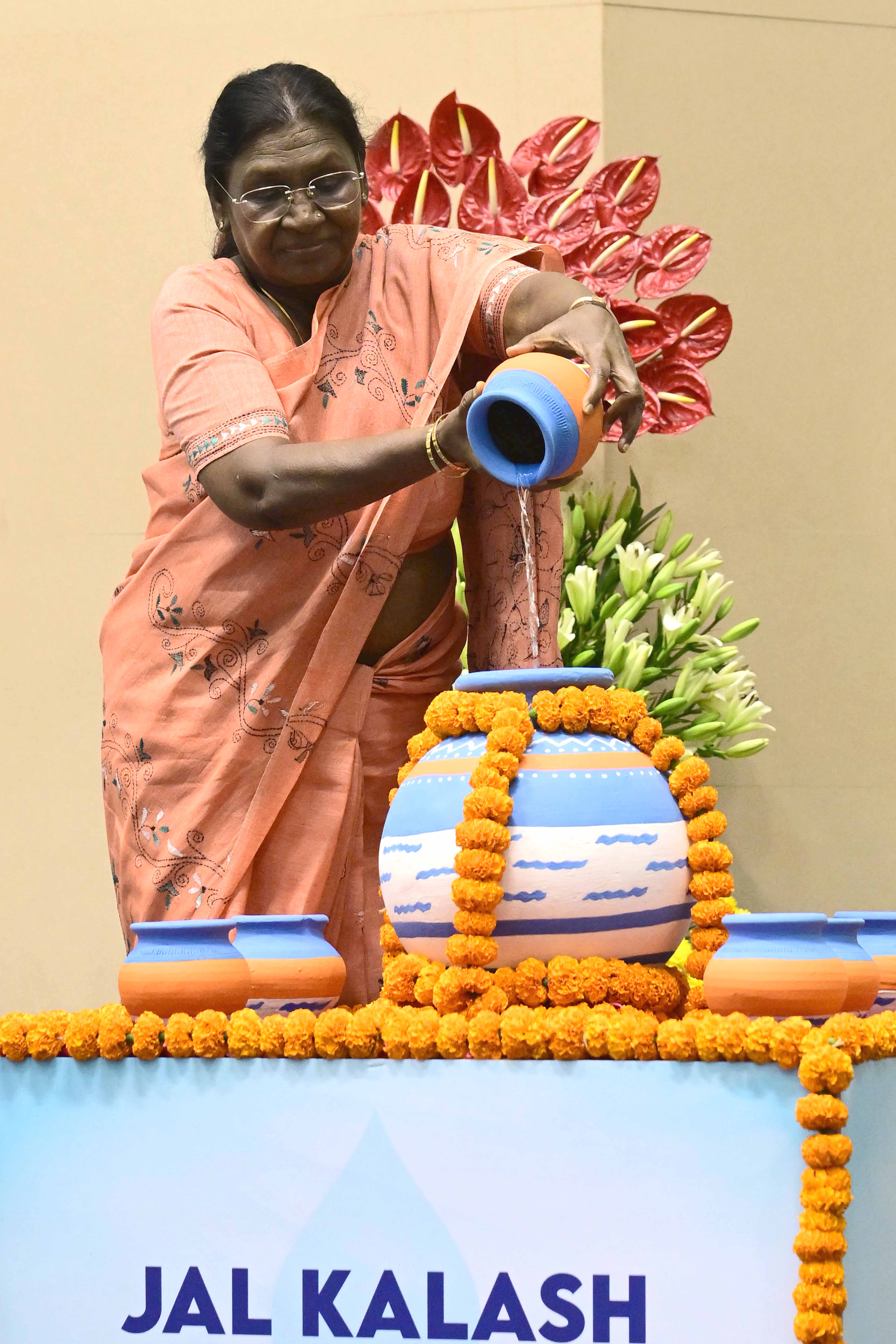
The President highlighted the JSJB initiative launched last year, saying it has mobilised large-scale grassroots action. She noted that more than 35 lakh groundwater recharge structures have been constructed under the programme — a major milestone in augmenting groundwater recharge and improving local water resilience.
These recharge structures, the President observed, demonstrate that community-led interventions can be both scalable and replicable when supported by policy convergence and local stewardship.
Circular water economy and industry role
President Murmu urged industries to adopt circular water economy principles — treating water as a reusable asset — and pointed to examples of units achieving Zero Liquid Discharge through treatment and recirculation. She said widespread adoption of such measures across industrial clusters would significantly reduce freshwater extraction and pollution.
The President encouraged farmers and entrepreneurs to use innovative agronomic and industrial practices that maximise output while minimising water use. She also praised tribal communities for their traditional stewardship of natural resources and urged wider emulation of such practices.
Multi-level governance and public participation
Emphasising decentralised action, the President called for consistent water conservation efforts from central and state governments down to district administrations, panchayats and municipal bodies. She also credited educational institutions, NGOs and citizen groups for participating in water stewardship and awareness campaigns.
“Effective water management is possible only with the participation of individuals, families, society, and the government,” she said, underlining the need for water awareness to become part of national civic culture.
Education, awareness and the road ahead
The National Water Awards aim to incentivise best practices and increase public consciousness about water use. The President indicated that the awards and JSJB models are designed to surface scalable methods for artificial groundwater recharge, community participation and resource convergence.
Looking ahead, she advised policymakers to prioritise water conservation in planning, and urged communities to remain vigilant and adopt water-saving habits as routine practice. The message was clear: policy and people must act together to secure water for future generations.