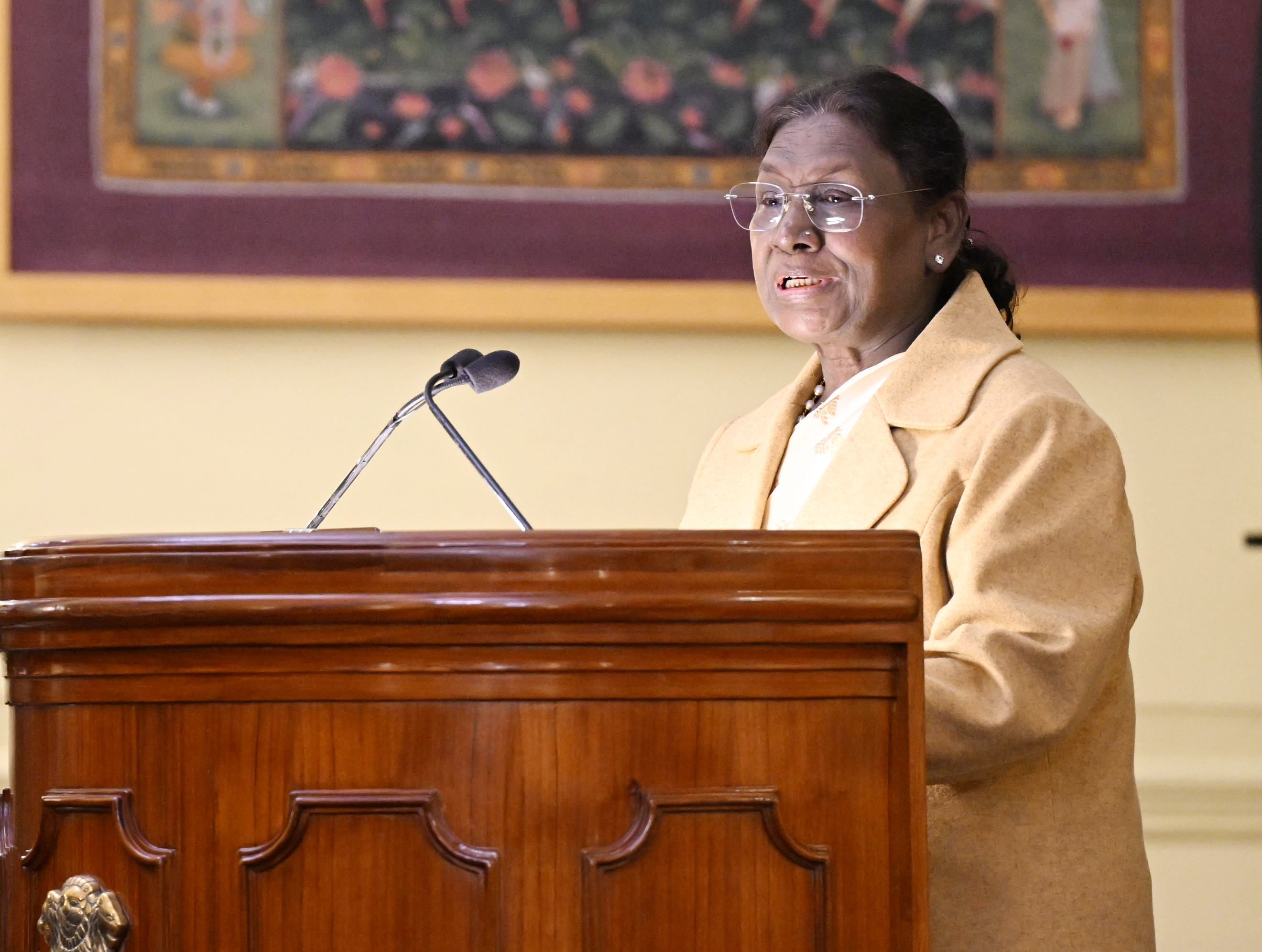
 ‘A Matter of Pride for Santhali Community’
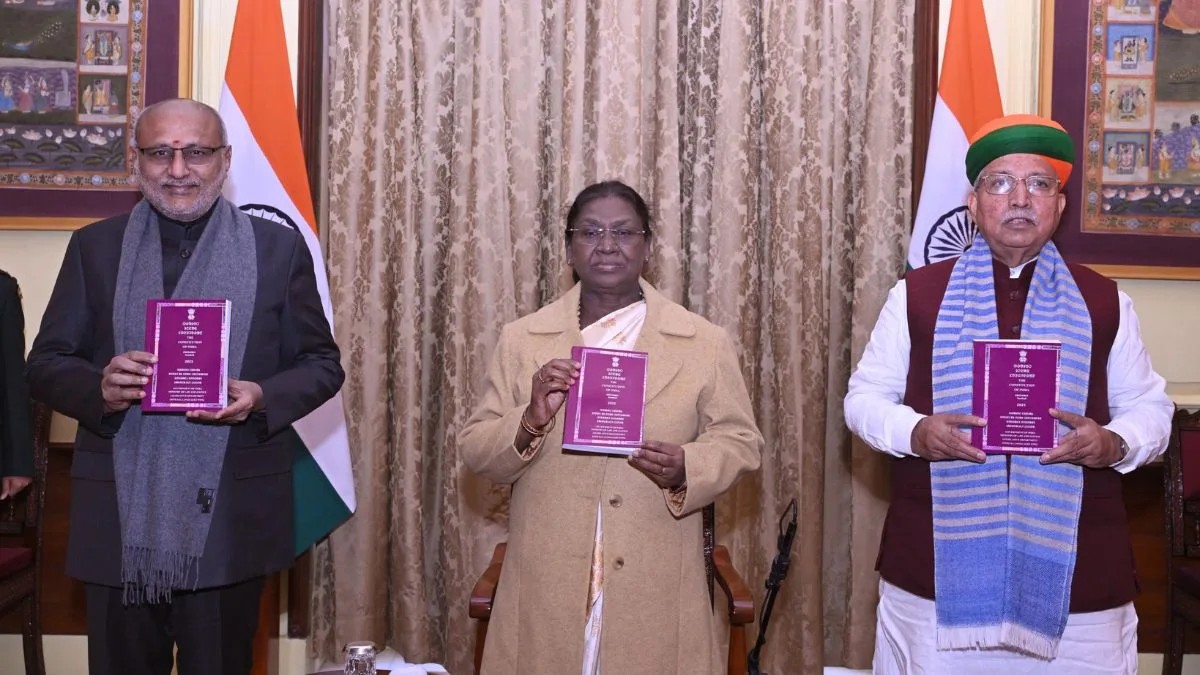
Addressing the gathering, President Murmu described the occasion as one of “pride and joy” for the Santhali people. She noted that the availability of the Constitution in Santhali would allow members of the community to read, comprehend and connect with the foundational document of the nation in their mother tongue.
The President underlined that language plays a crucial role in shaping identity and participation in democratic processes. When people understand the Constitution in their own language, it deepens their sense of belonging and trust in the system, she observed.
Ol Chiki Script Centenary Adds Special Significance
This year holds special importance as India celebrates the centenary of the Ol Chiki script, which was developed to give Santhali its own distinct written form. President Murmu highlighted that releasing the Constitution in Ol Chiki during its centenary year adds historical and cultural significance to the initiative.
She appreciated the efforts of the Ministry of Law and Justice in completing the monumental task, acknowledging the dedication of the minister and his team in ensuring linguistic accuracy and constitutional fidelity.
Dignitaries Grace the Historic Event
The ceremony witnessed the presence of several distinguished leaders, including Vice President of India Shri C. P. Radhakrishnan and Union Minister of State for Law and Justice Shri Arjun Ram Meghwal. Senior officials, scholars and representatives of the Santhali community were also present.
Speakers at the event emphasized that translating the Constitution into regional and tribal languages is essential for inclusive governance and for strengthening constitutional literacy at the grassroots level.
Santhali Language and Constitutional Recognition
Santhali is among the most ancient living languages of India and is spoken by millions of tribal citizens, primarily in Jharkhand, Odisha, West Bengal and Bihar. Its inclusion in the Eighth Schedule of the Constitution through the 92nd Constitutional Amendment Act of 2003 was a milestone in acknowledging tribal languages at the national level.
Since then, sustained efforts have been made to promote Santhali in education, administration and literature. The release of the Constitution in Santhali is seen as another decisive step in that direction.
Strengthening Democracy Through Language
Legal experts believe that the availability of the Constitution in Santhali will encourage greater awareness about fundamental rights, directive principles and constitutional values among tribal youth. It is expected to serve as an educational resource in schools, colleges and community institutions in Santhali-speaking regions.
Similar translations of the Constitution into other Indian languages have played a crucial role in enhancing civic participation and legal understanding, reinforcing the idea that language should never be a barrier to justice or democracy.
A Step Towards Inclusive Bharat
The initiative aligns with the broader national vision of inclusive development, where cultural heritage and linguistic diversity are treated as strengths rather than challenges. By embracing tribal languages within constitutional frameworks, India continues to reinforce its pluralistic and democratic ethos.