 Passenger Fare Changes: Small, Targeted Increases
Passenger fares were rationalised from July 1, 2025, with very modest rate adjustments designed to preserve affordability. Key elements of the revision include:
- No increase for General Class journeys up to 500 km; half-paisa per km increase thereafter.
- Half-paisa per km increase in Sleeper Class Ordinary and First-Class Ordinary.
- One paisa per km increase for Non-AC classes in Mail/Express trains.
- Two paise per km increase in reserved AC classes.
Fares for Monthly Season Tickets (MST) and suburban travel remain unchanged to protect daily commuters.
Freight Tariff Policy: No Revision Since 2018
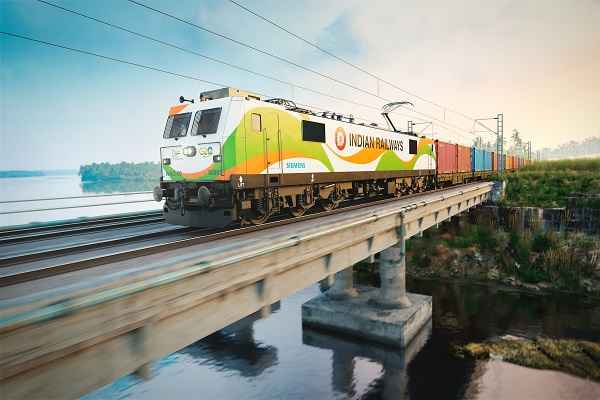
To keep India competitive in freight logistics, freight rates have been kept unchanged since 2018 despite increases in input costs. The minister noted that multiple operational and capital measures have been taken to expand capacity and improve service quality, allowing Indian Railways to absorb cost pressures while supporting industry competitiveness.
Infrastructure Push Behind Freight Growth
Railway expansion and modernization have been central to boosting freight volumes. The ministry outlined major capacity-building initiatives that underpinned the 1,617 MT achievement:
| Period / Category | Key Figures |
|---|---|
| New tracks commissioned (2009–14) | 7,599 km |
| New tracks commissioned (2014–25) | 34,428 km |
| Projects sanctioned (as on 01.04.2025) | 431 projects; Total length 35,966 km; Balance length 23,197 km; Estimated cost ₹6,74,920 Cr |
| EDFC & WDFC (total 2,843 km) | 2,741 km commissioned (96.4%) |
| Electrification (before 2014 / 2014–25) | 21,801 km / 46,900 km |
| Wagons & Locomotives (2014–25) | ~2 lakh wagons procured; >10,000 locomotives added |
The Railways has also remodelled yards, built bypasses and flyovers, increased train lengths, introduced higher-horsepower locomotives, and used IT solutions to improve asset utilisation. These measures, coupled with better maintenance regimes and industry participation in special-purpose rakes, have raised throughput per train and overall freight capacity.
Policy Reforms and New Initiatives
Several targeted policies are supporting modal shift to rail: the Gati Shakti Multi-Modal Cargo Terminal (GCT) policy has commissioned 118 new GCTs with ~192 MTPA capacity, and the Bulk Cement Terminal Policy aims to improve cement logistics. From 2023–24, ₹14,500 crore was allocated to upgrade freight and parcel terminals.
Industry partnerships have brought in around 240 rakes of special-purpose wagons, 374 rakes of general-purpose wagons and 48 automobile rakes. The cumulative effect is greater availability of rakes and higher loadability per wagon crucial for revenue gains.
Outcome: Competitive Transport and Social Goals
Union Minister Ashwini Vaishnaw highlighted that the subsidy and calibrated fare policy help Indian Railways remain among the most affordable transport options in the region while delivering world-class freight volumes. The twin objectives of social affordability and freight competitiveness appear to be guiding policy choices as Railways expands capacity and modernises services.