 What happened at Lucknow
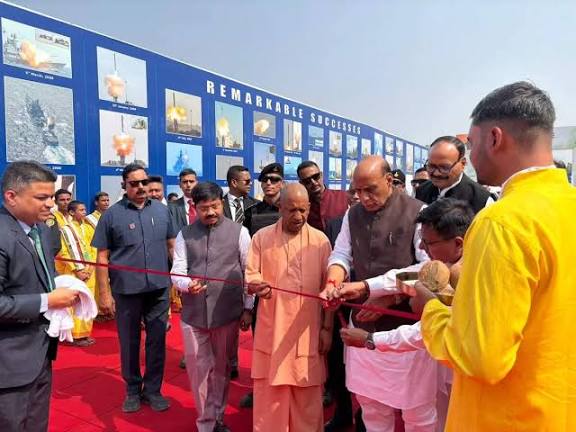
At a ceremony attended by Uttar Pradesh Chief Minister Yogi Adityanath, Singh described the BrahMos as “not just a missile but proof of India’s strategic confidence.” The event celebrated the production milestone and underlined the government’s push for defence manufacturing under the Atmanirbhar Bharat initiative.
The Lucknow facility will handle missile integration, testing and final quality checks — functions that reduce lead times and strengthen India’s defence industrial base in the Uttar Pradesh Defence Industrial Corridor.
Rajnath’s message: Operation Sindoor ‘just a trailer’
Speaking at the flag-off, Rajnath Singh said Operation Sindoor — the May strikes that targeted terror infrastructure across the border — was “just a trailer” of India’s capabilities and has made adversaries aware of India’s reach and readiness. He added that the country’s armed forces increasingly rely on indigenously built platforms like the BrahMos.
Officials and defence analysts say the statement underscores India’s intent to project deterrence through domestic production and operational use of high-speed cruise missiles. Independent commentators have used the May operation to examine lessons for future strategic posture.
Strategic and economic implications
The Lucknow unit marks a symbolic shift: missile manufacture is moving closer to India’s defence manufacturing corridors, creating skilled jobs and technical capacity in the region. The defence ministry has pitched this as both strategic and industrial progress.
Rajnath also noted that international interest in BrahMos technology is growing, saying recent deals and technical cooperation have attracted global partners — an observation echoed in government statements. For official details on the facility and defence manufacturing policy, see the Press Information Bureau release.
What analysts say
Security experts caution that while missile range and production capacity are important, diplomatic management and clear rules of engagement remain vital to prevent escalation in the region. Post-Operation Sindoor analysis highlights both operational successes and the risks of misperception between nuclear-armed neighbours.
Why this matters
The ceremony in Lucknow is a concrete sign of India’s push for defence self-reliance and a public signal of deterrence. For citizens, the immediate impact will be local employment and technology transfer; for policymakers, it reinforces the strategic aim of reducing import dependence for critical defence systems.