“One Sport, One State” – focus and the 60–40 model
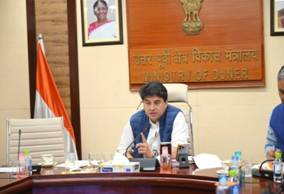
The HLTF on Sports, chaired by the Governor of Manipur, reinforced the “One Sport, One State” approach, asking each state to identify a discipline for end-to-end development. Scindia urged states to prepare micro-proposals aligned to their chosen disciplines – for example, Mizoram (Football), Manipur (Boxing & Weightlifting), Tripura (Judo), Meghalaya (Archery), Nagaland (Archery & Taekwondo) and Sikkim (Taekwondo).
Crucially, Scindia proposed a 60–40 model prioritising human resource development — coaching, talent scouting and technology-enabled training — allocating 60% of focus and resources to people and skills, and 40% to physical infrastructure. He argued that while facilities exist in many places, international success depends on long-term coaching ecosystems and athlete-centred methodologies.
 Bottom-up calendar, accountability and national integration
The Minister directed states to develop comprehensive sports calendars beginning at pre-school and school levels and progressing through block, district and inter-state competitions. The plan emphasises ministerial accountability, coordinated engagement with the Sports Authority of India (SAI) and the adoption of exposure programmes to accelerate athlete progression. The aim: develop at least one regional discipline into a national case study of sporting excellence.
Pilot approach to food self-reliance
The second HLTF meeting, chaired by Arunachal Pradesh Chief Minister Pema Khandu, focused on self-reliance in milk, eggs, poultry, meat and fisheries. Task Force members conducted a demand–supply analysis across the eight states and proposed a composite framework covering connectivity, value chains, breeding, productivity and access to credit and private investment.
To generate quick, scalable learning, the Task Force resolved to begin interventions in two states per product category (milk; eggs & poultry; meat; fisheries). Each pilot will map responsibilities across the value chain and combine Central, State and private financing to test models before wider roll-out. The approach aims to create a resilient, market-ready regional food economy.
Integrated market vision and logistics
Officials stressed treating the Northeast as an integrated market — moving surplus to deficit areas, identifying each state’s competitive strengths, and boosting intra-regional trade. Strengthened logistics and market linkages are expected to reduce wastage, expand market access for producers and improve nutrition outcomes for citizens. Scindia described the plan as essential to strengthen livelihoods and build a resilient regional food ecosystem.
Next steps and institutional support
Scindia asked State Ministers and Secretaries to work with MoS Sports, SAI and DoNER for aligned proposals that ensure ownership and sustainability. The meetings outlined clear implementation architecture, with interventions mapped to value-chain stages and funding tranches designed for joint contributions by Central, State and private partners.
“By strengthening production, upgrading value chains and improving logistics, we are laying the groundwork for a future where the Northeast’s food economy is self-reliant, market-ready and driven by shared prosperity,” Scindia said at the close of the sessions.