 Governance Beyond Compliance
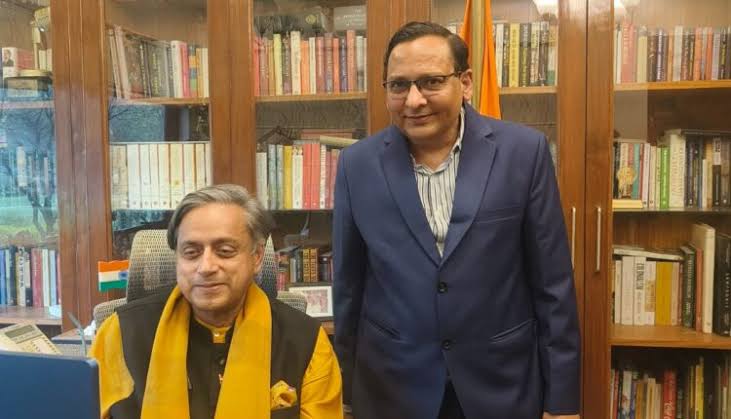
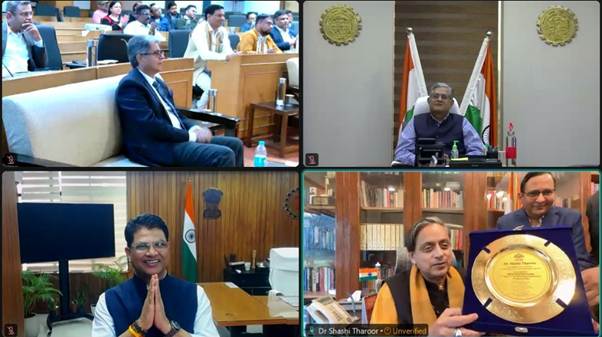
The anniversary session marked two years of RGDE, an institutional dialogue platform hosted under the aegis of the Pandit Deendayal Upadhyaya National Academy of Social Security (PDUNASS). The event saw participation from EPFO’s Central Board of Trustees, senior officers from field and zonal offices, and officials from the Ministry of Labour and Employment.
Dr Tharoor described governance as “a moral contract between the State and its people,” underscoring that transparency, accountability, participation and the rule of law must function alongside efficiency and empathy.
He cautioned policymakers against equating digitisation with genuine reform. “We must not merely digitise inefficiency; we must redesign it,” he said, advocating sustained Government Process Re-engineering and simplification of procedures across public institutions.
Highlighting a persistent paradox in modern administration, he noted that citizens are still required to repeatedly prove their identity and eligibility despite India’s expanding digital infrastructure. Governance, he argued, must move toward seamless integration that eliminates avoidable procedural hardship.
Technology With Ethics
Dr Tharoor stressed the importance of scientific temperament and evidence-based policymaking. Data-driven reviews and reasoned judgment, he said, should guide public institutions. However, he warned that knowledge without ethics risks distancing governance from the people it is meant to serve.
Grievance redressal systems, he asserted, should not be viewed as favour-granting platforms but as instruments of democratic respect. Public service delivery must be rooted in empathy and institutional trust.
In a lighter exchange during the interactive session moderated by Regional PF Commissioner Uttam Prakash, Dr Tharoor remarked that while Artificial Intelligence can process vast data and analyse trends, it cannot replicate human judgment, moral choice or democratic accountability.
RGDE’s Institutional Impact
Launched on Good Governance Day in December 2024, RGDE was conceived as a reflective forum to examine governance beyond routine compliance. Over two years, discussions have translated into tangible institutional measures within EPFO.
These include the introduction of a “Compassion in Governance” module inspired by Nobel Laureate Kailash Satyarthi, process simplification initiatives drawn from policy dialogues, strengthened ethics training frameworks, and a forthcoming joint diploma programme in Labour Law and Social Security in collaboration with Gujarat National Law University.
Central Provident Fund Commissioner Ramesh Krishnamurthy reaffirmed EPFO’s commitment to citizen-centric and technology-enabled services. Kumar Rohit, Director of PDUNASS, highlighted how the RGDE platform has strengthened reflective leadership and ethical capacity within the organisation.
EPFO, which manages retirement savings for millions of Indian workers, plays a crucial role in India’s social security architecture.
A Vision for Humane Governance
Concluding his address, Dr Tharoor offered a line that resonated strongly with the audience: “When governance becomes truly just, citizens cease to feel governed; they begin to feel cared for.”
With the conclusion of Season One, RGDE is set to return with renewed design and deeper engagement. The platform aims to continue strengthening governance that is accountable, technologically capable and fundamentally humane.