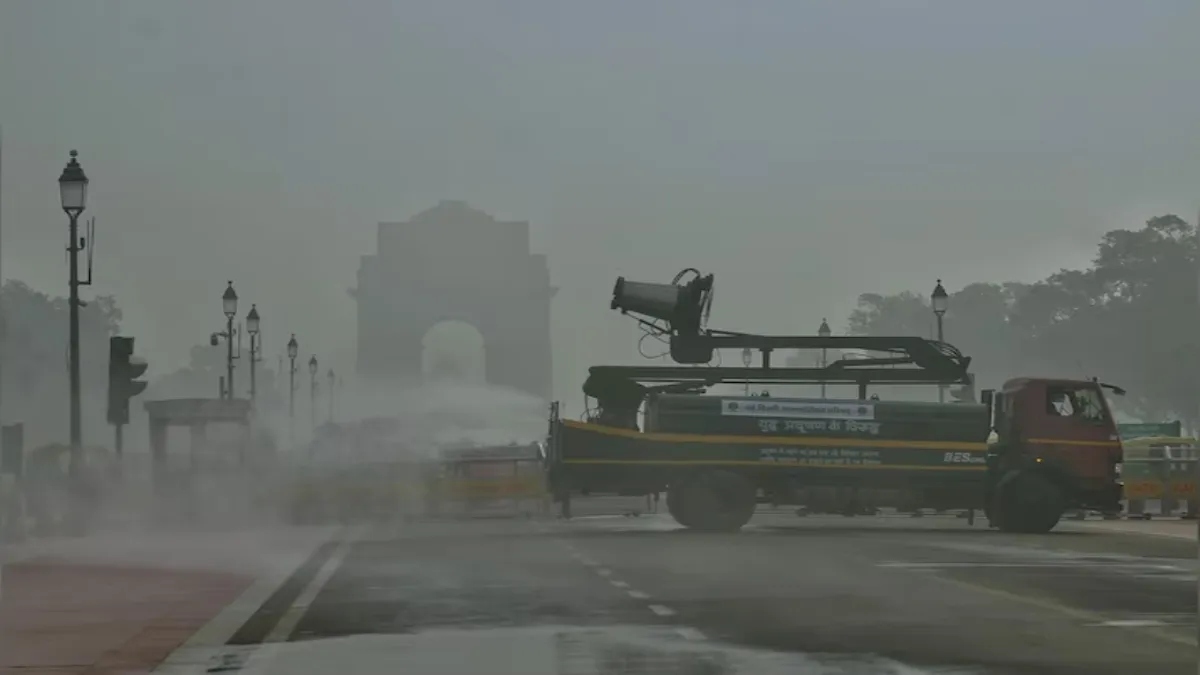
A public interest litigation filed by wellness advocate Luke Coutinho (styled in court papers as Luke Christopher Countinho) asks the Supreme Court to declare air pollution a national public-health emergency and direct immediate, time-bound action against toxic air across India. The petition contends that sustained breaches of national and global air quality limits have created a constitutional crisis affecting life and health under Article 21.
What the petition says
The PIL paints a bleak picture of ambient air quality in major cities and large swathes of rural India. It notes that India’s National Ambient Air Quality Standards (NAAQS) set the annual mean for PM₂.₅ at 40 µg/m³ and PM₁₀ at 60 µg/m³, while the World Health Organization’s 2021 guidelines recommend far lower limits. The petition cites examples where measured PM₂.₅ averages—Delhi (~105 µg/m³), Lucknow (~90 µg/m³) and Patna (~131 µg/m³ equivalent) far exceed national standards and WHO guidance.
 Claims of health damage and monitoring gaps
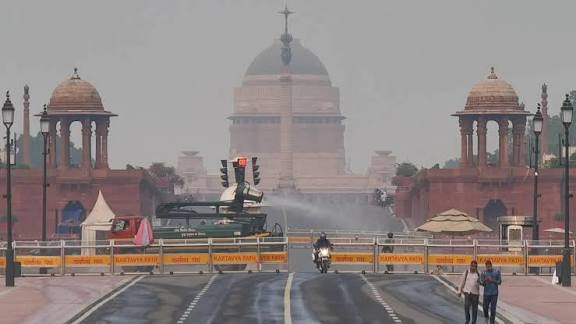
The petitioner asserts that the health toll is already severe citing studies and reports alleging that up to 2.2 million schoolchildren in Delhi have suffered irreversible lung damage and argues that rural and marginal communities remain invisible due to inadequate monitoring. The plea calls for a rapid expansion of air quality stations and a nationwide monitoring strategy.
Why the plea targets NCAP implementation
Launched in 2019, the National Clean Air Programme (NCAP) set staggered city targets and was later revised to aim for deeper cuts in particulate matter. The PIL urges that NCAP’s targets be given statutory force, with binding timelines, enforceable penalties and transparent monitoring pointing to gaps in fund utilisation and uneven results across NCAP cities. The government’s NCAP progress portal PRANA and PIB briefings on fund flows and action plans are cited as key references.
Reliefs sought from the court
Key reliefs listed in the petition include: (i) a declaration that air pollution is a national public-health emergency; (ii) a court-mandated, time-bound national action plan; (iii) making NCAP targets legally binding; (iv) constitution of an independent National Task Force on Air Quality and Public Health; (v) immediate measures to curb crop residue burning and incentivise alternatives; and (vi) strict enforcement for high-emitting vehicles and industries, including mandatory continuous emission monitoring.
Responses and context
Central agencies have previously highlighted both progress and shortfalls under NCAP: several cities have made measurable gains while others lag, and the Centre has published funding and implementation updates via PIB and CPCB portals. The petition argues that policy announcements alone are insufficient without statutory teeth and swift enforcement on the ground.
What to watch next
The Supreme Court will decide whether to entertain urgent interim directions such as immediate expansion of monitoring networks, emergency controls in hotspots, and a court-supervised implementation timetable. Environmental lawyers say the case could push NCAP from a policy framework into enforceable obligations, if the court grants remedies along the lines sought by the petitioner.