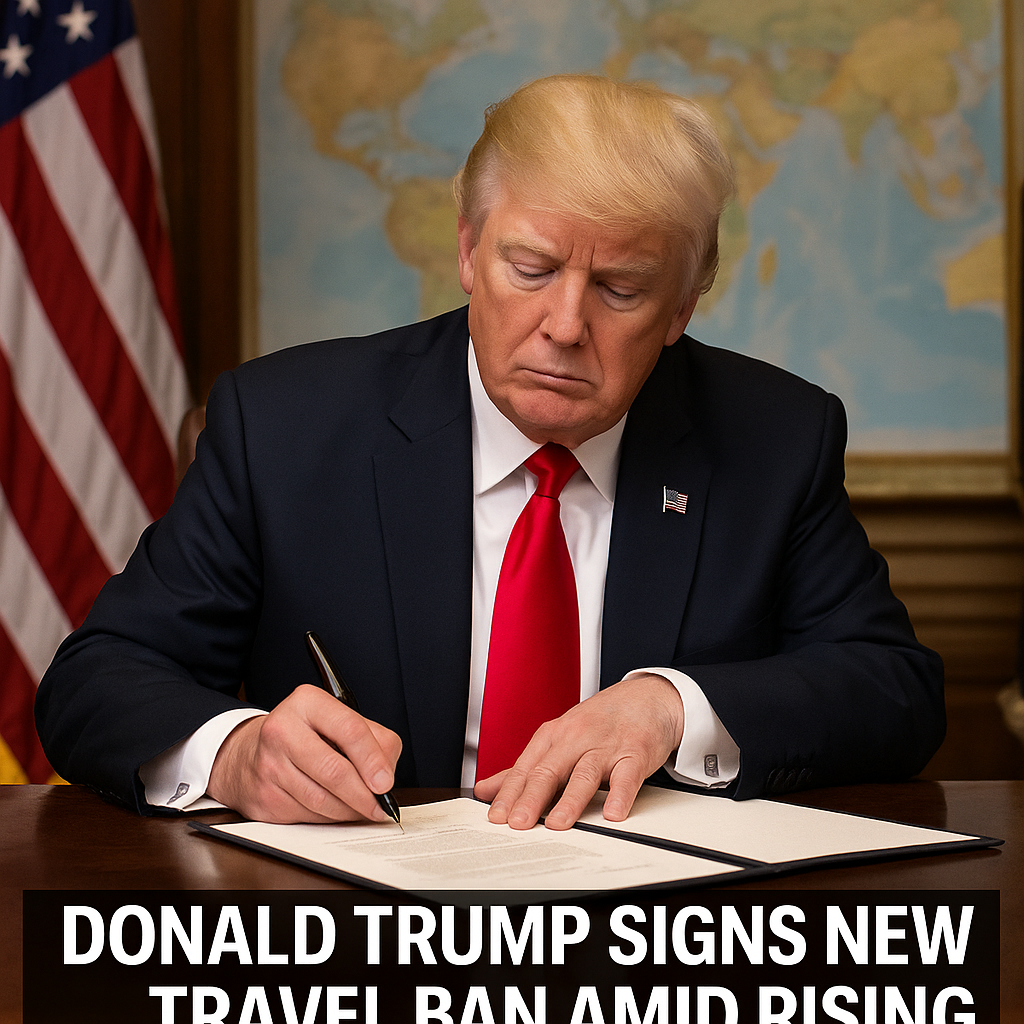
Washington D.C., June 5, 2025 — Former U.S. President Donald Trump has once again stirred global attention by signing a new executive order restricting travel to the United States from 19 countries. This includes a complete ban on 12 nations and partial restrictions on 7 others, including Cuba and Haiti. The decision, announced on Wednesday under Executive Order 14161, was justified using the Trump v. Hawaii (2018) Supreme Court ruling as legal precedent.
✅ What’s in the New Travel Ban?
Full Ban: Nationals from 12 countries are completely barred from entering the U.S.
Partial Restrictions: 7 other countries, including Cuba (partial) and Haiti (full), face restricted entry.
Reason Cited: The U.S. government states that terrorism risks, high visa overstay rates, and inadequate vetting procedures in these nations are the main reasons behind the action.
The new order, like the previous versions, relies heavily on Section 212(f) of the Immigration and Nationality Act, which allows the president to suspend entry of foreign nationals if deemed “detrimental” to U.S. interests.
⚖️ What is Trump v. Hawaii and Why It Matters in 2025
The administration is defending its decision by citing the landmark 2018 Supreme Court ruling in Trump v. Hawaii.
This case reviewed Trump’s third travel ban from 2017 that affected countries like Iran, North Korea, Somalia, Syria, and others. The lawsuit argued that the ban unfairly targeted Muslim-majority countries and violated both the Immigration and Nationality Act (INA) and the First Amendment.
➤ Key Supreme Court Ruling (2018):
Majority Opinion (5-4): Written by Chief Justice John Roberts, the Court upheld the ban.
Presidential Power: Confirmed that the president has broad discretion under INA Section 212(f).
No Religious Bias: Ruled that the order was based on national security concerns, not religion, despite Trump’s past statements about Muslims.
Dissenting View: Justices Sonia Sotomayor and Ruth Bader Ginsburg strongly disagreed, stating the order was fueled by anti-Muslim bias and compared it to the infamous Korematsu v. U.S. case during WWII.
🌍 Why Cuba and Haiti Are Targeted in 2025
Haiti: The country is under a full ban, citing a 31.38% overstay rate for B1/B2 visitor visas, making it one of the highest globally.
Cuba: Marked as a “State Sponsor of Terrorism”, Cuba faces partial restrictions over inadequate security and background checks.
🗣️ Reactions and Concerns
Human rights groups and immigration advocates have criticized the move, calling it discriminatory and politically motivated.
Some experts argue that it may affect thousands of families and workers with legitimate U.S. ties.
Supporters of the decision argue it is essential for national security and reflects the president’s authority to protect borders.
📌 What Comes Next?
Legal challenges are expected, but the Trump camp believes it is on strong legal footing thanks to the 2018 ruling. With the U.S. election season intensifying, the travel ban could become a hot topic in political debates and campaign rallies.