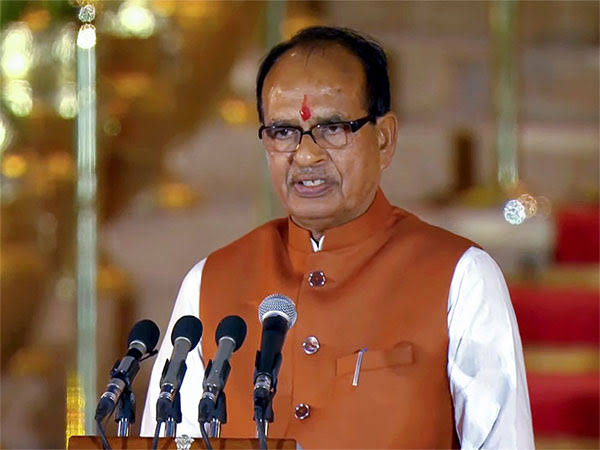
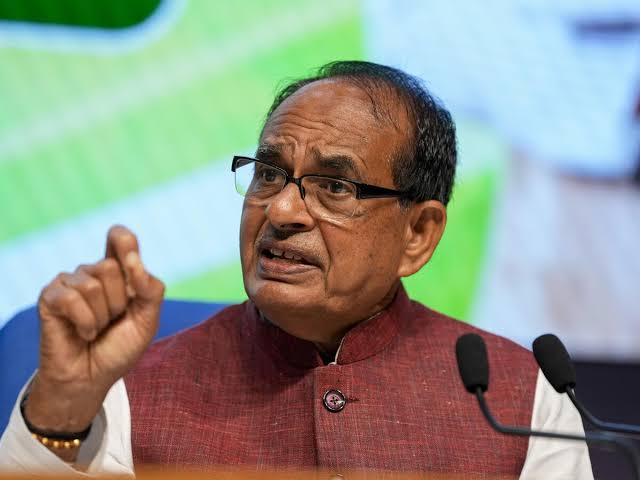
In a heartfelt address to farmers in Nagpur, Union Minister for Agriculture, Farmers Welfare, and Rural Development, Shivraj Singh Chouhan, reaffirmed the government’s commitment to transforming Indian agriculture through unity, innovation, and grassroots empowerment. Speaking at the ‘Krishi Samvad’ organized under the ‘Viksit Krishi Sankalp Abhiyan’, the Minister emphasized the vision of “One Nation, One Agriculture, One Team,” encouraging collaboration between central and state governments, research institutions, and farmers.
Joined by Maharashtra Chief Minister Devendra Fadnavis and several other dignitaries, Chouhan honored progressive farmers from the Nagpur division who have set an example through their efforts in natural and organic farming, as well as through farmer producer organizations. Their success stories were celebrated with deep appreciation, acknowledging the strength and resilience of India’s farming community.
Highlighting the potential of Maharashtra’s farmers, Chouhan praised their hard work and innovation, calling the state a land of limitless possibilities. He emphasized that the transformation of Indian agriculture must be a team effort involving ministries, agricultural scientists, and local institutions working in unison. He also commended Chief Minister Fadnavis for his tireless efforts in supporting farmers and modernizing agricultural practices in the state.
A significant announcement came with the inauguration of the National Soil Spectral Library, making Maharashtra the first state in the country to possess a comprehensive soil map. The library, developed using advanced hyperspectral sensor technology, will help farmers make informed decisions about crop selection and soil treatment. In addition, the launch of AI-based Smart Trap technology for detecting pink bollworm infestations in cotton crops showcased the government’s intent to bring cutting-edge solutions to farming challenges.
Chouhan also declared the establishment of a national-level laboratory in Pune for research on original plant species under the Clean Plant Program. He urged farmers to adopt disease-free nurseries, quality seeds, and soil testing to boost productivity and reduce input costs.
The Minister shed light on the Indian Council of Agricultural Research (ICAR), which operates 113 institutes nationwide, with 11 located in Maharashtra. A future meeting of ICAR institute heads in Nagpur is planned to further strategize on enhancing agricultural development in the region. As part of a focused campaign from May 29 to June 12, teams of scientists and extension officers will visit villages to provide guidance on sustainable practices and preparations for the Kharif season.
The program also saw the Chief Minister discussing the Wainganga-Nalganga River Linking Project, which promises to significantly enhance irrigation in Vidarbha. Meanwhile, the State Agriculture Minister spoke about efforts to address labor shortages with the development of battery-operated mini tractors for cotton harvesting.
The gathering was a celebration of the farming spirit and a promise of continued support from both the Union and State governments. With the combined strength of science, policy, and farmer participation, the event echoed a hopeful vision for a self-reliant and prosperous agricultural future for India.