 Early Life Rooted in Punjab
Vandi Verma was born near the Halwara Air Force Station in Punjab, India, into a family deeply connected to education and service. Her father served as a pilot in the Indian Air Force, while her mother was a schoolteacher. Growing up in an environment shaped by discipline, aviation, and learning, Verma developed an early fascination with science and technology.
She pursued a Bachelor of Technology in Electronics Engineering from Punjab Engineering College, Chandigarh. Her academic journey later took her to the United States, where she earned a Master’s degree and a PhD in robotics from Carnegie Mellon University, one of the world’s leading institutions in robotic research.
Journey into NASA
Verma began her association with NASA as an intern at the Ames Research Center. During this period, she tested Mars rover technologies in the Atacama Desert in Chile, an environment often compared to Martian terrain. It was here that she developed PLEXIL, a planning and execution language that later became a foundational tool for robotic autonomy.
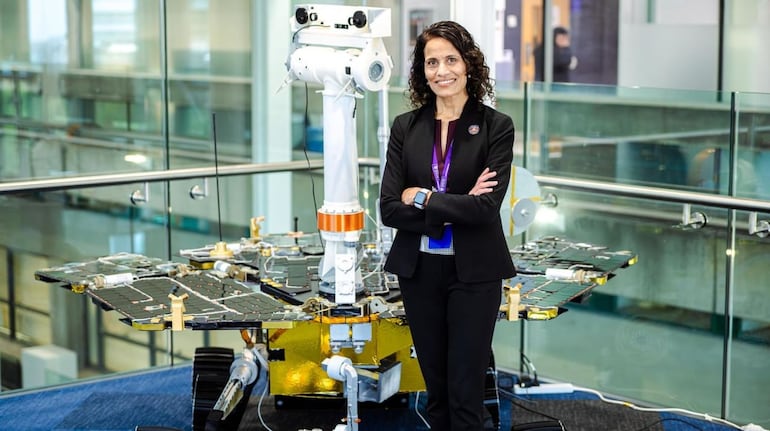
In 2007, she joined NASA’s Jet Propulsion Laboratory (JPL), contributing to the historic Spirit and Opportunity rover missions. These rovers went on to far exceed their planned lifespans, setting records and paving the way for more advanced missions.
Powering Perseverance and Ingenuity
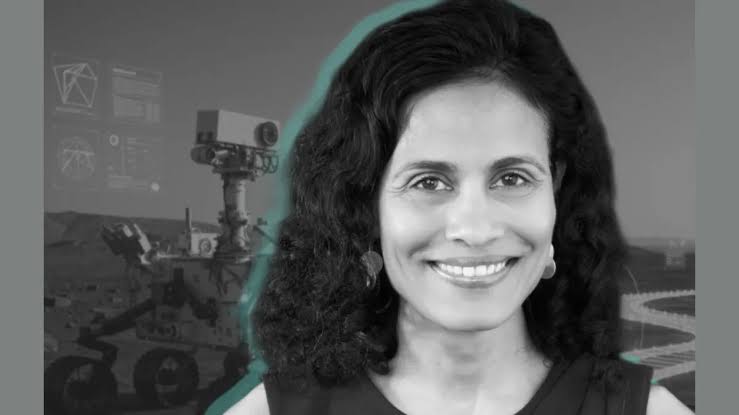
As Chief Engineer for robotic operations on the Mars 2020 mission, Vandi Verma oversaw how Perseverance navigates, collects samples, and interacts with its environment. Her expertise in autonomy allowed the rover to perform self-directed drives, avoiding hazards without waiting for instructions from Earth.
She also played a key role in enabling coordination between Perseverance and NASA’s Ingenuity helicopter. Ingenuity’s aerial scouting provided critical data to help Perseverance choose safer and more efficient routes across the Jezero Crater.
Advancing Autonomous Space Exploration
Verma’s work has influenced multiple NASA missions through technologies such as AutoNav, AEGIS, and advanced surface simulation systems. These innovations have reduced dependence on constant Earth-based control, saving time and enabling more ambitious scientific exploration.
Her contributions also support future missions like Mars Sample Return and Dragonfly, extending the impact of her research well beyond Perseverance.
An Inspiration for India and the World
Vandi Verma’s journey from Punjab to NASA stands as a powerful example of Indian talent contributing to global scientific progress. She continues to inspire students, especially young women, to pursue careers in science, technology, engineering, and mathematics.
As space exploration enters an era of artificial intelligence and autonomy, Verma’s work ensures that humanity explores farther and smarter than ever before.