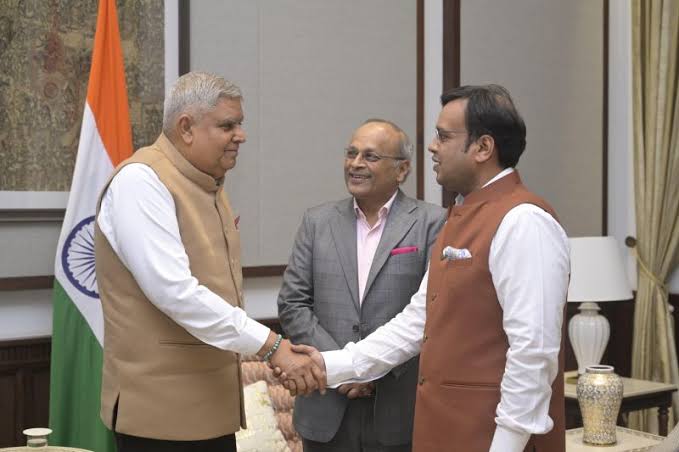
The Vice-President’s recent address at the Annual Convocation of the Jaipuria Institute of Management was a heartfelt and inspiring message to the graduating students and everyone present. His words carried not only wisdom but also a deep sense of hope and responsibility for the youth stepping into the future.
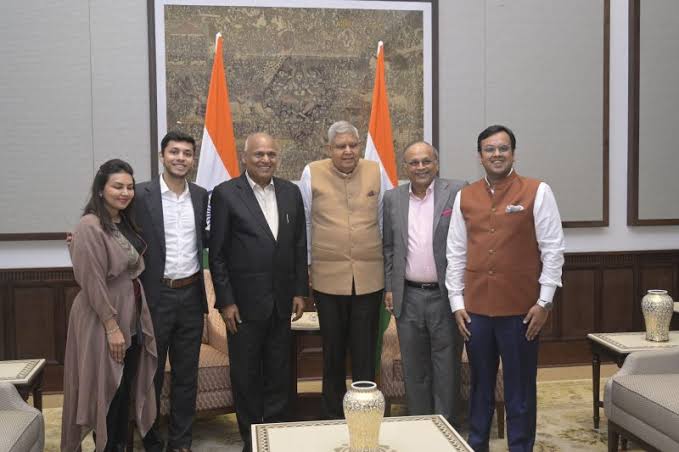
Beginning with warm congratulations to the students and their families, he reminded everyone that a convocation is not just a ceremony marking an end, but a beginning—a call to lifelong learning. Quoting the ancient Greek philosopher Heraclitus, he stressed that change is the only constant in life, urging young minds to embrace continuous learning and growth.
He acknowledged the challenges that lie ahead, recognizing that the world is unpredictable and often harsh. Yet, unlike previous generations, today’s youth have the advantage of an encouraging environment, supportive government policies, and abundant opportunities to pursue their dreams. The Vice-President paid tribute to the visionary founders and leaders of the institute, emphasizing the crucial role education plays in fostering equality and social progress.
Highlighting India’s remarkable strides in defense and national security, he commended the nation’s resilience and the government’s decisive actions in safeguarding its people. The message was clear: the nation’s progress depends on the strength and dedication of its citizens, especially the youth who hold the key to the country’s future.
He also spoke passionately about the importance of quality education being accessible to all, warning against the dangers of commercialization and commodification of learning. Education, he said, is not a business but a noble service to humanity. Drawing on India’s rich educational heritage from ancient institutions like Nalanda and Takshila, he urged students to honor this legacy by striving for excellence and inclusivity.
Addressing the youth directly, he encouraged them to look beyond conventional career paths and explore the expanding horizon of opportunities in technology, innovation, and research. He stressed that India is no longer just a country with potential but a rising global power, poised to become one of the largest economies in the near future. With a youthful population and growing infrastructure, India is the most aspirational nation today.
The Vice-President called upon students to harness emerging technologies such as artificial intelligence and blockchain as tools for progress and innovation, reminding them that meaningful research must aim to create real-world solutions rather than remain confined to theory. He appealed to corporations to invest in education and research, viewing it as an investment in the nation’s future.
Throughout his address, there was a consistent theme of patriotism and a call for “nation first” thinking. He urged the youth to be mindful of economic nationalism, to support Indian industry, and to remain vigilant about external influences that might threaten the country’s interests. This strong sense of responsibility, he said, should be instilled from childhood.
In closing, the Vice-President left the graduates with encouraging words about failure and innovation. He reassured them that failure is not defeat but a stepping stone to success, and he urged them to actively engage their minds and creativity rather than passively storing ideas. His message was clear: the future belongs to those who dare to learn, adapt, and innovate with courage and conviction.
This address was not just a speech but a heartfelt plea for the young generation to rise to their potential with confidence, responsibility, and an unshakable commitment to the nation and humanity.