Vice-President Jagdeep Dhankhar has made an emotional and urgent appeal to all political parties in India. He emphasized the need for respectful dialogue, constructive politics, and unity in the national interest.
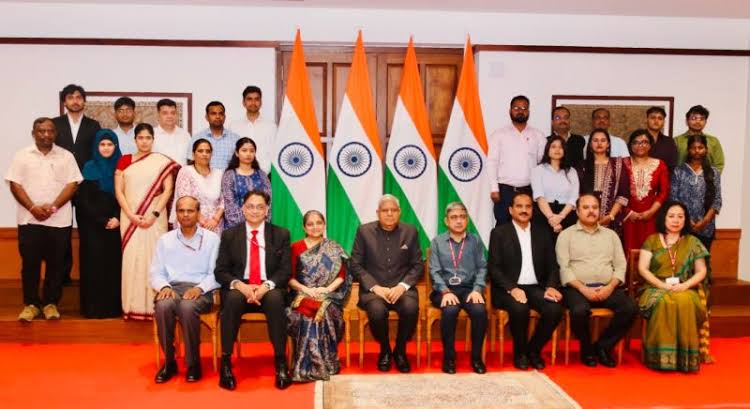
Speaking at the inauguration of the 8th batch of the Rajya Sabha Internship Programme (RSIP), he addressed several critical issues facing Indian democracy today.
Politics Should Unite, Not Divide
“Politics is not confrontation,” VP Dhankhar said. “It is the art of achieving the same national goal through different approaches.” His message was clear. India’s democratic strength lies in diverse views. But these differences should never lead to personal attacks or bitterness.
He urged leaders across parties to engage in respectful discourse, both in Parliament and public platforms like television.
 Stop the Name-Calling Culture
Dhankhar pointed out the disturbing trend of trading insults on television debates and social media. “Isn’t it tiring to the ears?” he asked. “Our culture doesn’t teach us to call others names. That is not civilizational decorum.”
He stressed that leaders, especially senior ones, deserve respect regardless of party lines. He warned that bitterness on screen and online only serves to polarize and weaken the nation.
Respect Opposing Views — That’s Democracy
VP Dhankhar reminded everyone of India’s deep-rooted tradition of Anantavad—the belief in endless dialogue. Debate, discussion, and respectful disagreement are part of Indian culture. But ego and arrogance must not define our politics.
“If we only believe our view is right and others are wrong, that’s not democracy. That’s ego,” he said.”We must listen. It’s important to understand. Now is the time to reflect.”
Youth Must Lead the Change
Addressing the youth participants of RSIP, he called them the true pressure group. “Your thought process can shape the future of Indian politics,” he said.”Stand for dignity in discourse. Insist on civility. Uphold respect in every exchange.”
He believes that a cultural shift, driven by young minds on social media and in public life, can restore faith in India’s democratic dialogue.
Constructive Criticism is Not Condemnation
In a key message, VP Dhankhar reminded politicians that suggestions for improvement are not insults. “Nothing is ever perfect. There’s always room to grow. A suggestion is not an attack—it’s an opportunity,” he said.
He encouraged all political parties—whether ruling or opposition—to welcome feedback and criticism with grace and humility.
Hope for the Upcoming Parliament Session
VP Dhankhar expressed hope for “meaningful and serious deliberations” in the upcoming monsoon session of Parliament. He expects it to reflect India’s democratic maturity and focus on real issues.
He reminded lawmakers that democracy is a continuous journey of improvement, and the nation needs political leaders to collaborate, not compete in conflict.
Unity Above All
“Let us not fight among ourselves. Let us not look for enemies within,” Dhankhar urged. He affirmed that every Indian political party, at its core, believes in the progress of Bharat.
He reiterated that India’s political agenda should never be influenced by external forces or divisive rhetoric. “We are a sovereign nation. We stand tall in the world. Let us not weaken ourselves from within.”
India’s Culture Is Dialogue, Not Division
The Vice-President’s speech was not just a call to politicians—it was a call to every citizen. It asked Indians to reflect on how we express our opinions, how we disagree, and how we move forward as a nation.
He quoted the essence of Indian culture: expression is free, but should never be final or absolute. “Speak your thoughts. But don’t assume yours is the only truth.”
Key Takeaways from VP Dhankhar’s Address
- Politics must be respectful and constructive.
- Mutual respect is the foundation of democracy.
- TV debates and social media must reflect civility.
- Youth should influence politics with positive thinking.
- Differences are healthy—but bitterness is dangerous.
- Constructive criticism should be welcomed, not feared.
Conclusion: Time to Heal Our Democracy
VP Jagdeep Dhankhar’s words resonate at a time when political discourse often turns toxic. His message is a timely reminder that India’s strength lies in dialogue—not division. Respect is not weakness. Listening is not losing. And unity is not optional—it’s essential.
India stands at a turning point. With young citizens demanding dignity, and leaders willing to listen, there’s hope for a more harmonious and effective democracy. As VP Dhankhar rightly said, “Let us not have politics over national interest. Let us not have politics over development. Let us have unity in our thought process.”