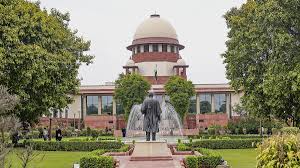
In a deeply contested and emotionally charged hearing, the Supreme Court on May 20, 2025, continued to examine a batch of petitions challenging the constitutional validity of the Waqf (Amendment) Act, 2025. At the heart of the arguments was a sense of anxiety and dismay within the Muslim community, which fears the new law undermines their centuries-old right to manage religious properties and affairs.
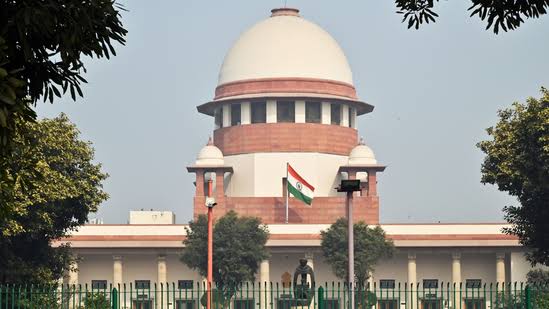
Senior advocates including Kapil Sibal, Rajeev Dhavan, A.M. Singhvi, and Huzefa Ahmadi passionately laid out their concerns before a Bench led by Chief Justice B.R. Gavai. They argued that the amendments amounted to what they called a “creeping acquisition” of waqf properties by the government, dismantling an intricate legal and religious framework that had evolved through decades of jurisprudence and statutory protections.
Kapil Sibal, representing the petitioners, criticized the introduction of provisions that require individuals to prove they are practising Muslims for at least five years before dedicating a waqf. This, he argued, was discriminatory and violated the right to freely practice religion under Article 25 of the Constitution. He also highlighted how the amended law centralizes control, placing immense power in the hands of District Collectors—government officers—who are now tasked with determining the authenticity of waqf registrations. If a Collector disputes the status of a property, no court can be approached after six months, effectively closing legal recourse for many.
Senior advocate Abhishek Manu Singhvi challenged the government’s claim of a 116% rise in waqf properties from 2013 to 2024. He asserted that what the government described as an “explosion” was merely a digital consolidation and updation of records—an administrative exercise misrepresented as an alarming trend. He further criticized the government’s framing as prejudicial, lacking a complete national survey of waqfs across states and union territories.
The concerns voiced in court extended to the spiritual and cultural implications of the law. Rajeev Dhavan emphasized that properties and institutions central to the faith of a community—mosques, graveyards, and madrasas—are not mere physical assets but vital to religious identity and freedom. He cautioned that taking these away weakens the very foundation of secularism.
Equally troubling to the petitioners was the overlap of the Waqf (Amendment) Act with laws like the Ancient Monuments and Archaeological Sites and Remains Act. Section 3D of the new law states that any waqf property deemed a protected monument loses its waqf status. This, senior advocate Ahmadi warned, could render a large number of historic mosques and sites legally non-existent as waqfs.
Sibal lamented that the legislative process behind the 2025 amendments was hasty and opaque. He stated that key provisions were introduced during the final stages of voting, without adequate deliberation or circulation in the Joint Parliamentary Committee (JPC). This lack of procedural fairness, he argued, mirrors the disregard shown in the content of the amendments themselves.
The petitioners also expressed concern over the changing composition of the Waqf Boards and the Central Waqf Council. The 2025 Act allows a majority of non-Muslims in administrative bodies tasked with managing Muslim religious properties—an unprecedented and, according to the petitioners, unconstitutional move that dilutes the community’s autonomy.
Throughout the hearing, the advocates repeatedly underlined that these changes strike at the core of Articles 14, 25, and 26 of the Constitution, which guarantee equality before law, the right to practice religion, and the freedom to manage religious affairs. Sibal urged the court to consider the irreparable harm the law could inflict if allowed to remain in force even temporarily.
Though no interim stay was granted by the Supreme Court at this stage, the matter remains under serious scrutiny. The Bench, led by Chief Justice Gavai, is expected to hear further arguments before delivering a verdict that could have long-lasting implications for constitutional freedoms and minority rights in India.
At a time when many in the community are feeling unheard and vulnerable, this case stands as a crucial moment for the judiciary to affirm its role as the guardian of rights and the Constitution.