Why Alaska Hosts the High-Stakes Trump-Putin Summit
1. Geographic Symbolism
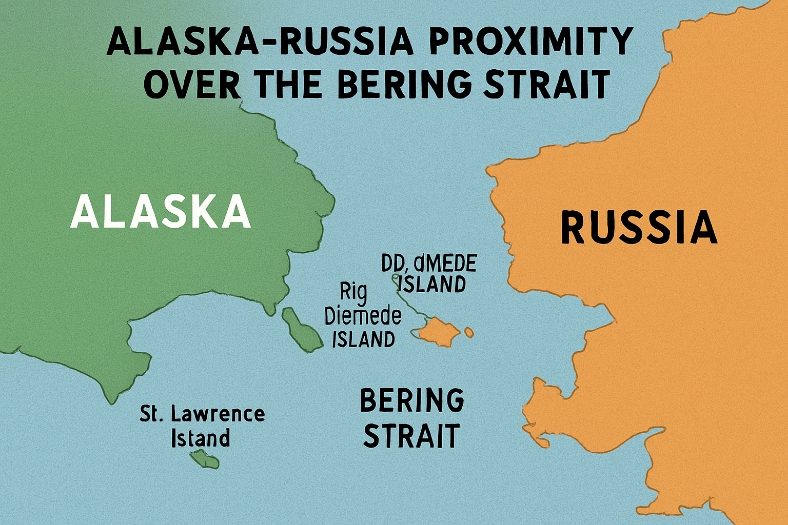
Alaska is the closest US state to Russia, separated by just 55 miles across the Bering Strait. Once a Russian colony for over 65 years, it has been a site of both cooperation and conflict between the two nations. Experts note that the location serves as a reminder of the 19th-century period when US-Russia relations were relatively cordial.
2. Legal Shield for Putin
Putin faces travel restrictions to 125 countries that recognise ICC jurisdiction due to war crime allegations. The US does not recognise ICC authority, making Alaska a safe venue for the Russian leader. Hosting the summit in a US territory avoids legal complications while allowing tight control over security.
3. Military Significance
Joint Base Elmendorf-Richardson is Alaska’s largest military installation and a critical hub for Arctic defence operations. It played a role in World War II by ferrying aircraft to the Soviet Union and remains integral to America’s northern defence strategy.
4. Arctic Interests
Both nations have overlapping interests in the Arctic, including energy resources, shipping routes, and climate research. The region’s strategic importance has grown due to global energy demands and shifting geopolitical dynamics, particularly after the Ukraine conflict disrupted resource access.
5. Historical Connections
Beyond politics, Alaska’s Russian heritage underlines its symbolic importance. Purchased from the Russian Empire in 1867, the state embodies a chapter in history when diplomacy outweighed rivalry.
 Strategic Venue for Sensitive Talks
The choice of Alaska combines geography, security, and political calculus. Its remote yet accessible location allows for discreet, well-protected negotiations while signalling to the world that the US and Russia can still engage diplomatically despite deep differences.