

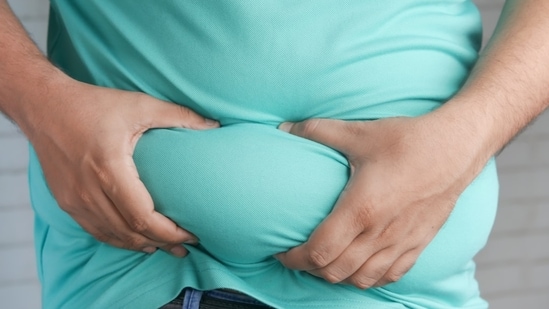

Dr Sethi noted that after 30, people often feel that “the same foods lead to more belly fat” and “the same workouts give fewer results.” Even occasional cheat meals can have a larger impact than they did in one’s twenties.
This happens because the body’s ability to burn calories efficiently declines with age. As a result, excess calories are more easily stored as fat, particularly in the abdominal region.
Loss of Muscle Mass Slows Metabolism
One of the most significant contributors to increased belly fat after 30 is gradual muscle loss. Dr Sethi explained that adults naturally lose around 3–8% of muscle mass per decade after the age of 30.
Muscle tissue is metabolically active and burns calories even at rest. Losing just one kilogram of muscle can significantly reduce daily energy expenditure, making fat gain more likely even without overeating.
Muscles are also responsible for handling nearly 70–80% of glucose disposal. When muscle mass decreases, glucose stays in the bloodstream longer and is more likely to be stored as abdominal fat.
Declining Insulin Sensitivity
Another critical factor is reduced insulin sensitivity. With age, insulin sensitivity declines by approximately 4–5% per decade, according to Dr Sethi.
This means that consuming the same amount of carbohydrates leads to higher blood sugar spikes than before. These spikes trigger faster fat storage, particularly around the waistline, increasing the risk of insulin resistance over time.
Hormonal Changes After 30
Hormonal shifts further contribute to abdominal fat gain. Levels of growth hormone, testosterone and oestrogen decline with age, while cortisol, the stress hormone, tends to increase.
“This combination favours deep abdominal fat storage,” Dr Sethi explained. Over time, this leads to an increase in visceral fat, which is more harmful than fat stored under the skin.
Why Visceral Fat Is More Dangerous
Visceral fat surrounds internal organs such as the liver and intestines. Dr Sethi warned that this type of fat worsens insulin resistance and promotes inflammation.
The effects are even stronger in people with fatty liver disease, prediabetes, diabetes or high triglyceride levels. In such cases, insulin resistance pushes more fat into the abdomen and liver, increasing long-term health risks.
Signs Your Metabolism Is Slowing
According to the gastroenterologist, common warning signs include an increase in belly size despite stable body weight, afternoon energy crashes, stronger sugar cravings and bloating after eating carbohydrates.
Gaining fat primarily in the upper abdomen is another indicator that metabolic efficiency may be declining.
Science-Backed Tips to Lose Belly Fat
Dr Sethi emphasised that belly fat after 30 is reversible with consistent lifestyle changes. Adequate protein intake is crucial, with a recommended range of 1.2–1.6 grams of protein per kilogram of body weight daily.
Strength training at least three times a week helps preserve and rebuild muscle mass. Daily walking improves insulin sensitivity, while 7–8 hours of quality sleep supports hormonal balance and recovery.