

Addressing the gathering, Prof. (Dr.) Kashinath Samagandi, Director of MDNIY, highlighted the clinical relevance of meditation in managing occupational stress, which he said accounts for nearly 60–70 percent of stress-related issues today. He stressed the importance of aligning the body and mind through practices described in the Patanjala Yogasutra.
Referring to contemporary research, Dr. Samagandi explained that neuroimaging studies have shown how Om chanting significantly reduces activity in the amygdala, the brain region associated with fear and negative emotions. This effect occurs through the activation of the prefrontal cortex, which plays a key role in emotional regulation.
Evidence from Neuroimaging Studies
Citing findings from functional magnetic resonance imaging (fMRI) studies, the MDNIY Director noted that loud Om chanting leads to notable deactivation of the amygdala compared to the resting state. These observations, he said, provide scientific validation to practices that have been followed for centuries in the yogic tradition.
He also referred to studies conducted at the All India Institute of Medical Sciences (AIIMS), New Delhi, which indicate that Yoga Nidra produces measurable changes in brain activity. These changes are associated with deep relaxation, emotional balance and a reduction in systemic inflammation, all of which contribute to effective stress management.
Spiritual Perspective on Inner Peace
Representing the spiritual lineage of meditation, Swami Muktimayananda of the Ramakrishna Mission, New Delhi, encouraged participants to turn inward to attain lasting peace. He said true calmness begins with self-understanding and the recognition of one’s inner nature, described as Sat Chit Anand Swaroop.
He emphasised that adherence to the principles of Yama and Niyama is essential to overcome ego, jealousy and unfulfilled desires that disturb mental harmony. According to him, meditation rooted in ethical living leads to compassion, clarity and emotional stability.
Practical Demonstrations and Public Participation
The programme featured live demonstrations of various meditation techniques, allowing participants to experience their immediate calming and centring effects. These sessions aimed to equip individuals with practical tools to enhance mental resilience and emotional well-being in daily life.
The event concluded with a collective pledge by participants to incorporate meditation into their daily routine, reinforcing the vision of a “Healthy Mind, Healthy India.”
Wide Participation and National Significance
The celebration witnessed the participation of around 700 individuals, including yoga practitioners, students, faculty members and officials from various departments. Notable attendees included Shri Atul Chawla of Vishvas Meditation, Dr. I. N. Acharya, Programme Officer at MDNIY, and Md. Taiyab Alam, Communication and Documentation Officer of the institute.
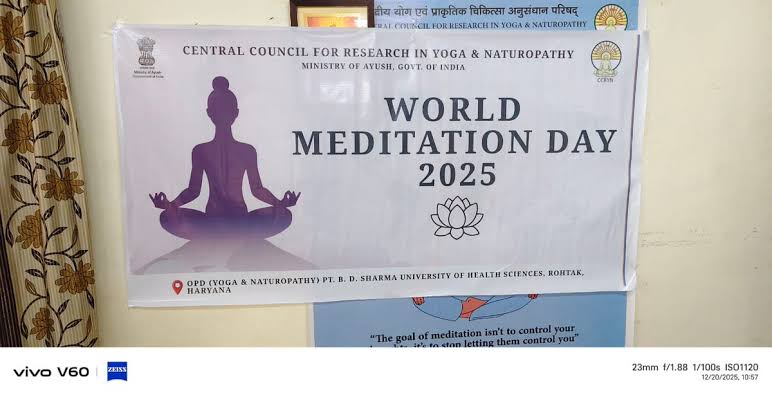
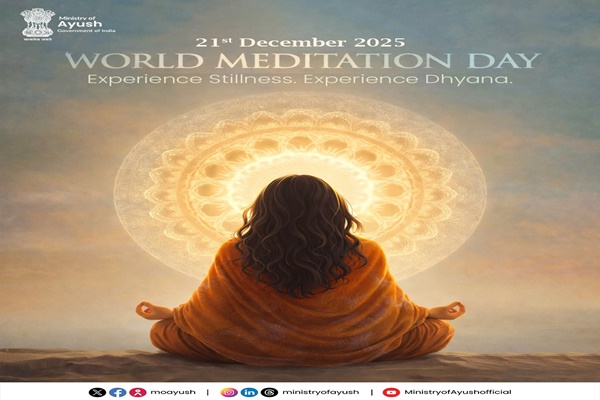
It is noteworthy that the United Nations General Assembly last year proclaimed 21 December as World Meditation Day, reaffirming the right of every individual to enjoy the highest attainable standard of physical and mental health.
Aligning Tradition with Modern Lifestyles
The observance aligns with the Ministry of Ayush’s broader efforts to integrate traditional Indian knowledge systems with contemporary lifestyle practices. MDNIY officials said meditation offers a low-cost, accessible and scientifically validated approach to improving mental health outcomes.