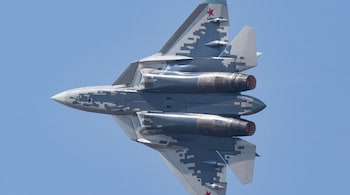
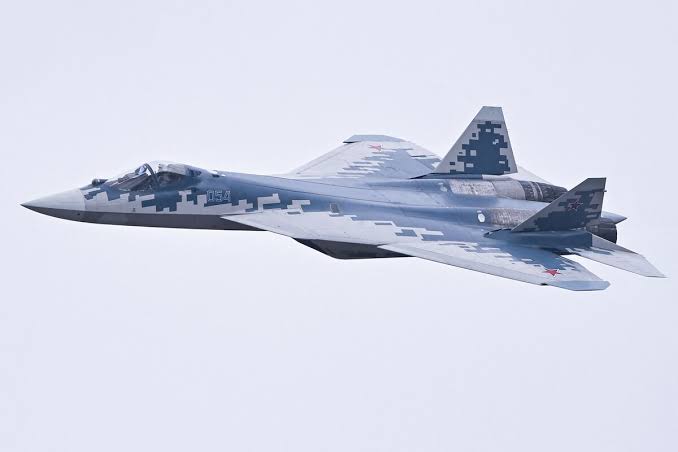
As Russian President Vladimir Putin prepares to visit New Delhi on December 4–5, Moscow has renewed a sweeping defence pitch that pairs an offer of licensed production and technology transfer for the Su-57E stealth fighter with proposals to expand missile cooperation including additional S-400 systems and interest in the S-500 family. New Delhi faces a trade-off between long-standing trust in Russian missile hardware and cautious reservations about acquiring a fifth-generation fighter.
 What Russia is offering
Russian officials have reportedly offered full licensed production of the Su-57E in India together with broad technology transfer across avionics, engines, sensors, stealth materials and other systems even proposing support for India’s indigenous AMCA programme. Moscow has also discussed training and technical cooperation on advanced air weapons and low-signature technologies. The plan, if adopted, would represent one of the most ambitious bilateral defence transfer offers in recent years.
Why New Delhi is cautious on Su-57
Despite the generous terms on offer, Indian defence planners and analysts remain cautious. The Indian Air Force (IAF) is already stretched: squadron strength has fallen to roughly 29 combat squadrons against an authorised target of 42, creating urgent capability shortfalls. Experts worry a Su-57 buy could complicate or even undercut the indigenous Advanced Medium Combat Aircraft (AMCA) programme and raise questions about maintenance, integration and lifecycle costs. Debates also persist over the Su-57’s operational maturity and long-term sustainment.
Missiles: the trusted backbone
By contrast, Russian missile systems remain a known and trusted commodity for India. New Delhi is in talks to acquire additional S-400 Triumf air-defence units reports say five more systems are being negotiated and is exploring the S-500 for higher-altitude and longer-range coverage. Indian commanders point to the S-400’s recent performance during operations earlier this year as evidence of its value, and replenishment contracts for interceptor missiles are already in motion.
BrahMos, Kalibr and a growing missile portfolio
India’s indigenous-Russian joint venture has also delivered operational capability. The supersonic BrahMos cruise missile derived from the Russian P-800 Oniks played a prominent role in strikes earlier in 2025 and remains central to India’s strike planning. Newer BrahMos variants such as BrahMos-NG (a smaller, aircraft-mountable version) and plans for a hypersonic BrahMos-II reflect ongoing modernisation. Meanwhile, New Delhi has shown interest in other Russian missiles, from short-range MANPADS to longer-range naval systems.
Strategic and technical considerations
Russian missiles carry battlefield pedigree and an export record that eases operational integration. Systems such as Iskander, Kalibr and long-range air-to-air weapons like the R-37M have shaped recent conflicts and influenced global air-defence thinking. Moscow’s reported advances including claims about the Burevestnik nuclear-powered cruise missile underscore both the potency and controversy surrounding modern Russian missile designs, though independent verification of some claims remains limited. New Delhi must weigh these operational gains against sanctions risks, supply-chain resilience and long-term strategic autonomy.
What to expect from the summit
During the December 4–5 summit, defence procurement and technology cooperation will be high on the agenda. India is likely to secure agreements to replenish missile inventories and to seek clarity on any Su-57 offer’s timelines and conditions. Observers say New Delhi will aim to protect its indigenous programmes while extracting practical benefits from Russian offers prioritising systems that provide immediate, reliable capability over long, speculative technology transfers.